Deep brain stimulation has changed the outlook for a lot of Parkinson’s patients. Tremor, stiffness, medication that stopped working as well as it used to. DBS helps with all of that, for the right patient. It’s not automatic, though. Neurologists screen candidates carefully. A meaningful share of patients who ask about DBS get steered toward other treatment instead, usually for reasons that have little to do with how long they’ve had Parkinson’s.
“DBS can be transformative, but selecting the right patient takes more than confirming a Parkinson’s diagnosis. Cognitive health, psychiatric stability, and levodopa response all factor into the decision.”
Dr. Guruprasad Hosurkar, Neurologist, Bangalore
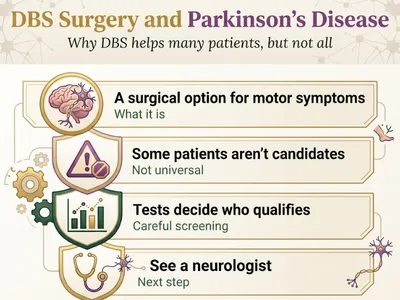
DBS candidacy varies a lot person to person. Speak with Dr. Guruprasad Hosurkar.
Think of it as a pacemaker, but for the brain.
What Is Deep Brain Stimulation (DBS) Surgery?
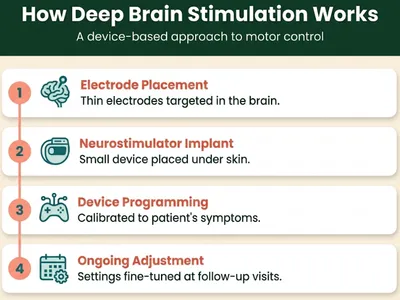
Thin electrodes go into a specific brain area that controls movement. A small implanted device sends them regulated electrical pulses. Those pulses interrupt the abnormal signals behind tremor, rigidity, and slowness. DBS doesn’t reverse Parkinson’s. It doesn’t stop the disease either. It quiets symptoms that medication has stopped handling well.
A Parkinson’s diagnosis by itself isn’t enough.
Is DBS Surgery Suitable for Every Parkinson's Patient?
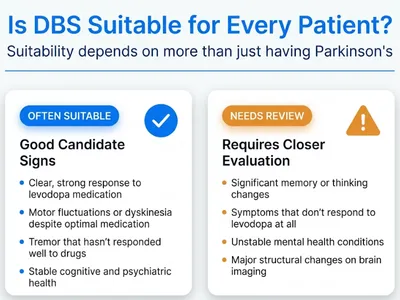
DBS tends to work best when levodopa still helps, just not enough. Motor fluctuations. Dyskinesia despite an optimized dose. Those are the patients who usually benefit most. Symptoms that never responded to levodopa rarely respond to DBS either. Significant cognitive or psychiatric issues shift the conversation toward other options.
Levodopa response history matters early in this conversation.
Six factors come up repeatedly during candidacy screening.
Who May Not Be a Candidate for DBS Surgery?
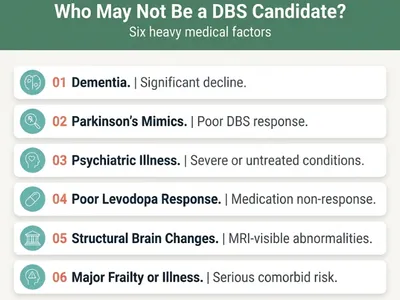
Age by itself rarely disqualifies a patient. Overall health matters more. So does cognitive stability. So does what the brain looks like on imaging. The six factors below cover most of the cases where DBS gets ruled out or pushed back.
Patients managing broader Parkinson’s disease treatment in Bangalore often bring up DBS at some point. A proper workup settles whether it fits.
The workup usually takes weeks, spread across several specialists.
What Tests Are Done Before DBS Surgery?
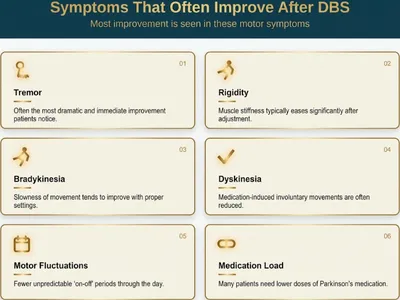
No single test decides candidacy alone. Neurology looks at symptoms and progression. Imaging checks brain structure. Neuropsychology checks memory and thinking. Psychiatry checks mental health stability. The final call usually comes from a team discussion, not one appointment.
A consultation is where this workup usually begins.
Motor symptoms respond best. Some others barely respond at all.
What Parkinson's Symptoms Improve After DBS?
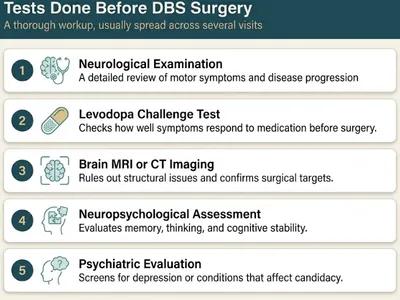
Tremor usually improves the most, and often the fastest. Rigidity eases. Slowness improves too. Dyskinesia from medication tends to drop. So do the on-off swings that frustrate a lot of patients day to day. Balance, speech, and memory issues are different. Those rarely improve the same way, which is why setting expectations matters before surgery, not after.
Common questions from patients weighing this decision.
FAQ
What age is too old for DBS surgery?
No fixed cutoff exists. Health and cognitive stability carry more weight than age.
Does DBS cure Parkinson's disease?
No. It helps specific symptoms. The disease keeps progressing regardless.
What happens if a Parkinson's patient is not eligible for DBS?
Care continues through medication changes, physical therapy, and symptom-specific plans.
How do doctors decide if DBS is suitable?
Levodopa response testing. Brain imaging. Cognitive and psychiatric evaluation. All three factor in.
Can DBS worsen Parkinson's symptoms?
On rare occasions, yes, usually speech, balance, or mood rather than the core motor symptoms. Careful screening keeps this risk low.