
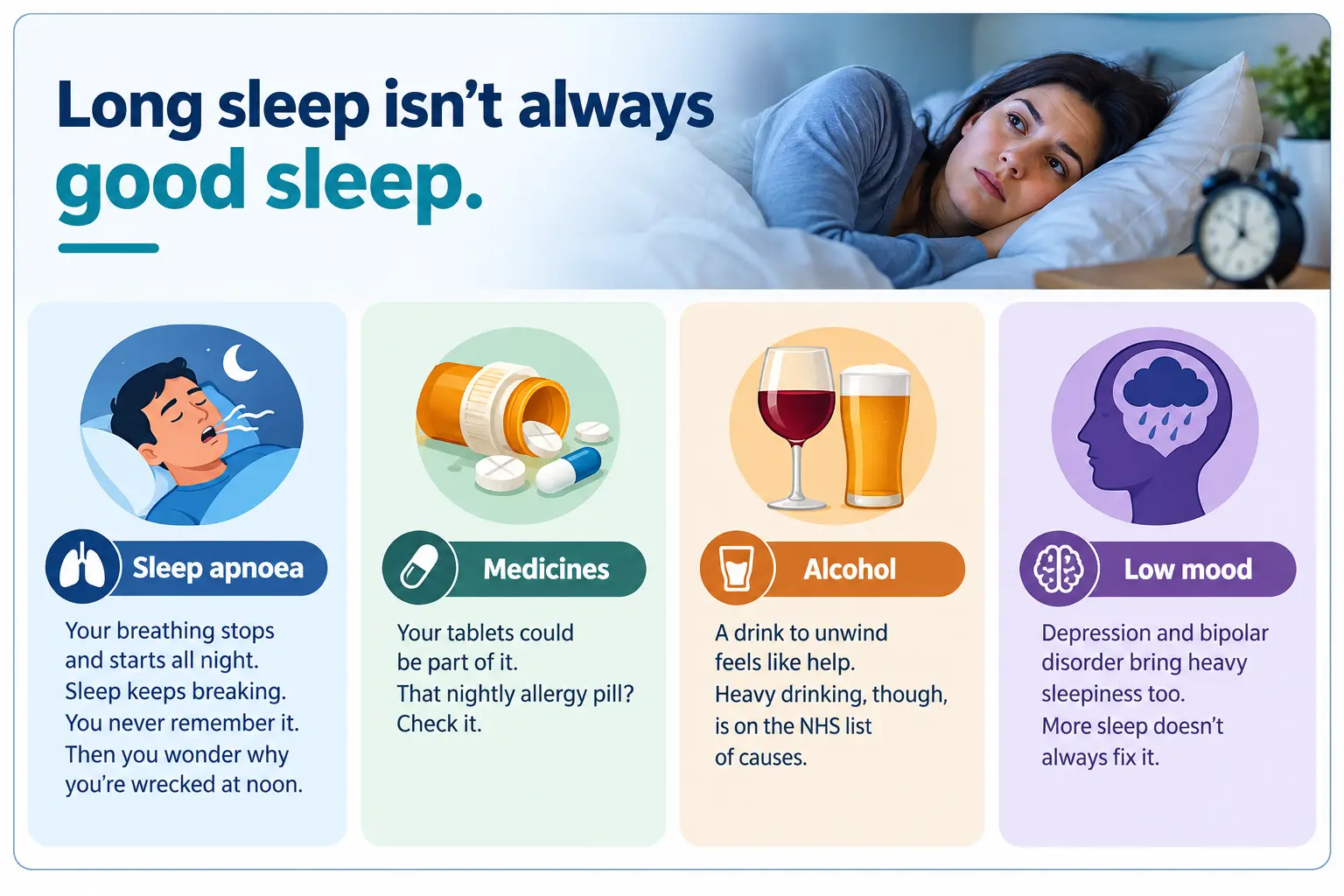
You slept eight hours. Still yawning by eleven. Sound familiar? It isn’t laziness. Sleep apnoea, some medicines, low mood, even a brain-based sleep disorder can do this. The NHS says see a doctor if you often fall asleep in the daytime.
According to Dr. Guruprasad Hosurkar, a Neurologist in Bangalore, sleepiness evaluation: “Time in bed isn’t time asleep. If someone’s nodding off in meetings, I want to know what happened between pillow and alarm.”
Nodding off in meetings despite a full night’s sleep?
What Makes You Sleepy After a Full Night's Sleep?
Is it the sleep itself? Then neurological sleep disorders is worth a read.
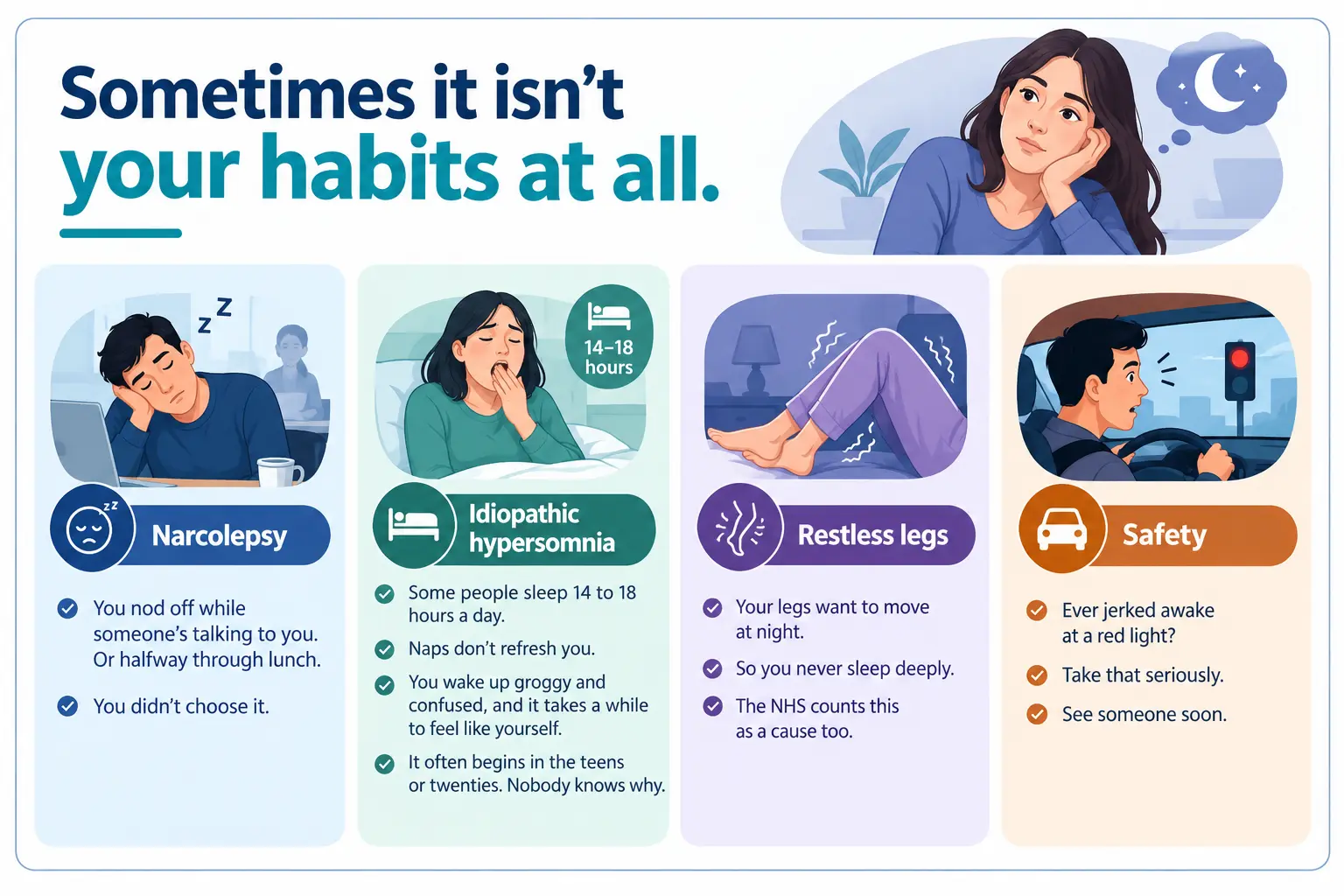
When Is Constant Sleepiness a Neurological Problem?
Want the bigger picture? How sleep disorders are connected to neurological health has it.
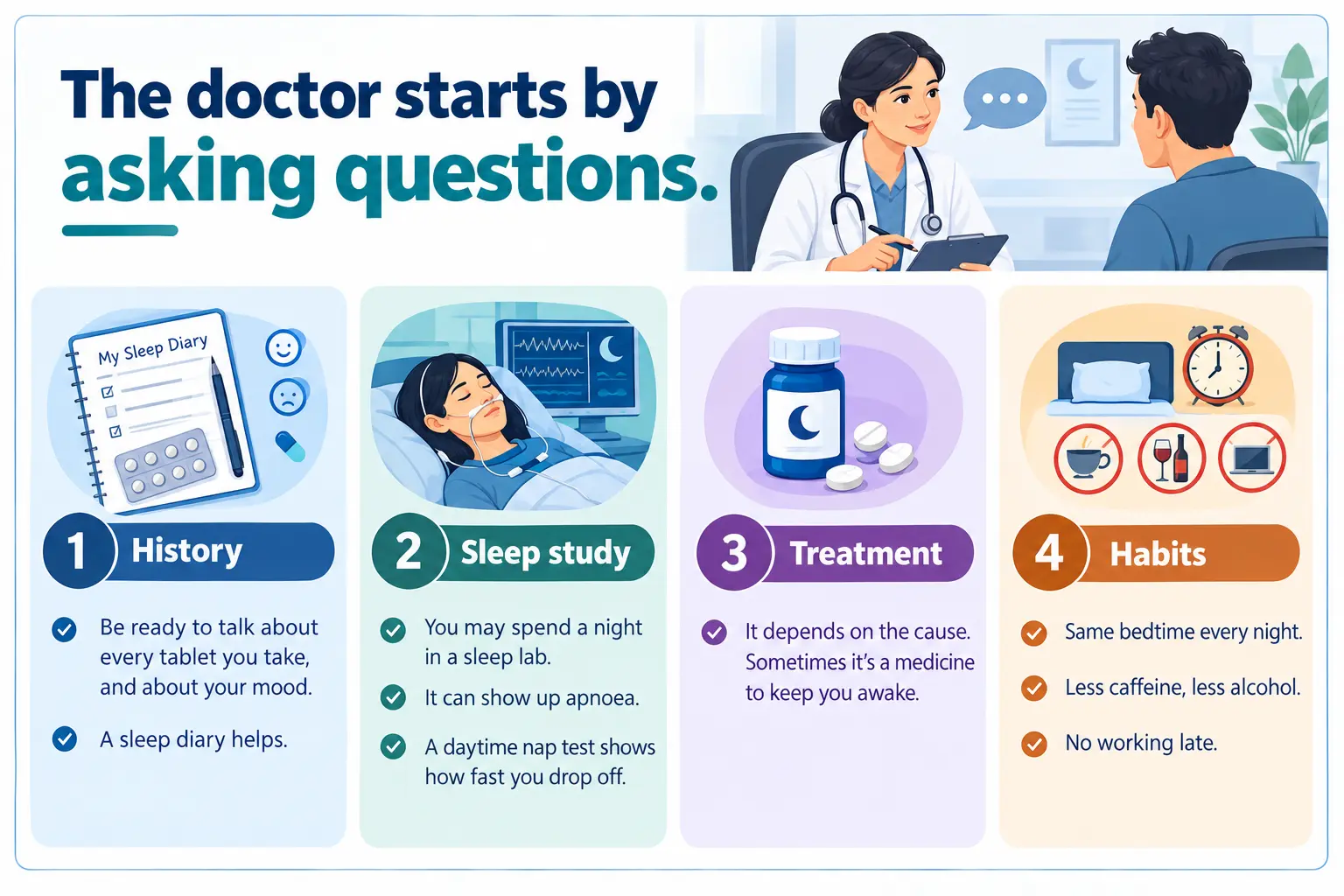
How Is Constant Daytime Sleepiness Diagnosed and Treated?
Sleep problems like restless leg syndrome are part of everyday neurology. Your legs want to move at night, and you can’t settle. Sleep stays light, and you feel it the next day.
Key Takeaways
- Sleeping eight hours doesn’t mean you slept well.
- Apnoea, medicines and low mood are common culprits.
- Falling asleep often in the daytime? See a doctor.
- Narcolepsy means sudden sleep. Idiopathic hypersomnia means long sleep and no energy.
- Drowsy? Don’t drive. And name every tablet to your doctor.
FAQ
Why am I tired after eight hours of sleep?
Could be apnoea, a medicine, low mood or a sleep disorder like narcolepsy.
When should I worry about being sleepy in the day?
If you often drop off in the day. Or if it’s wrecking your daily life.
What is idiopathic hypersomnia?
Constant sleepiness and very long sleep that doesn’t refresh you. No known cause.
How is daytime sleepiness treated?
It depends on the cause. Sometimes medicine to keep you awake.