
Huntington’s disease is passed down through families, and it works by slowly killing nerve cells in parts of the brain. It rarely announces itself. A fidgety hand at dinner, a temper that wasn’t there last year, and nobody thinks of the brain. Symptoms usually appear in middle age, which is exactly when many people already have children. That’s what makes the inheritance question so heavy, and why families deserve the facts straight.
According to Dr. Guruprasad Hosurkar, a Neurologist in Bangalore, Huntington’s disease care, “With Huntington’s, the patient is never the only person in the room. Each of their children has a 50% chance of carrying the same gene change, and that changes who I need to talk to.”
Watching a parent develop jerky movements and wondering about yourself?
What Does Huntington's Disease Do to the Brain?
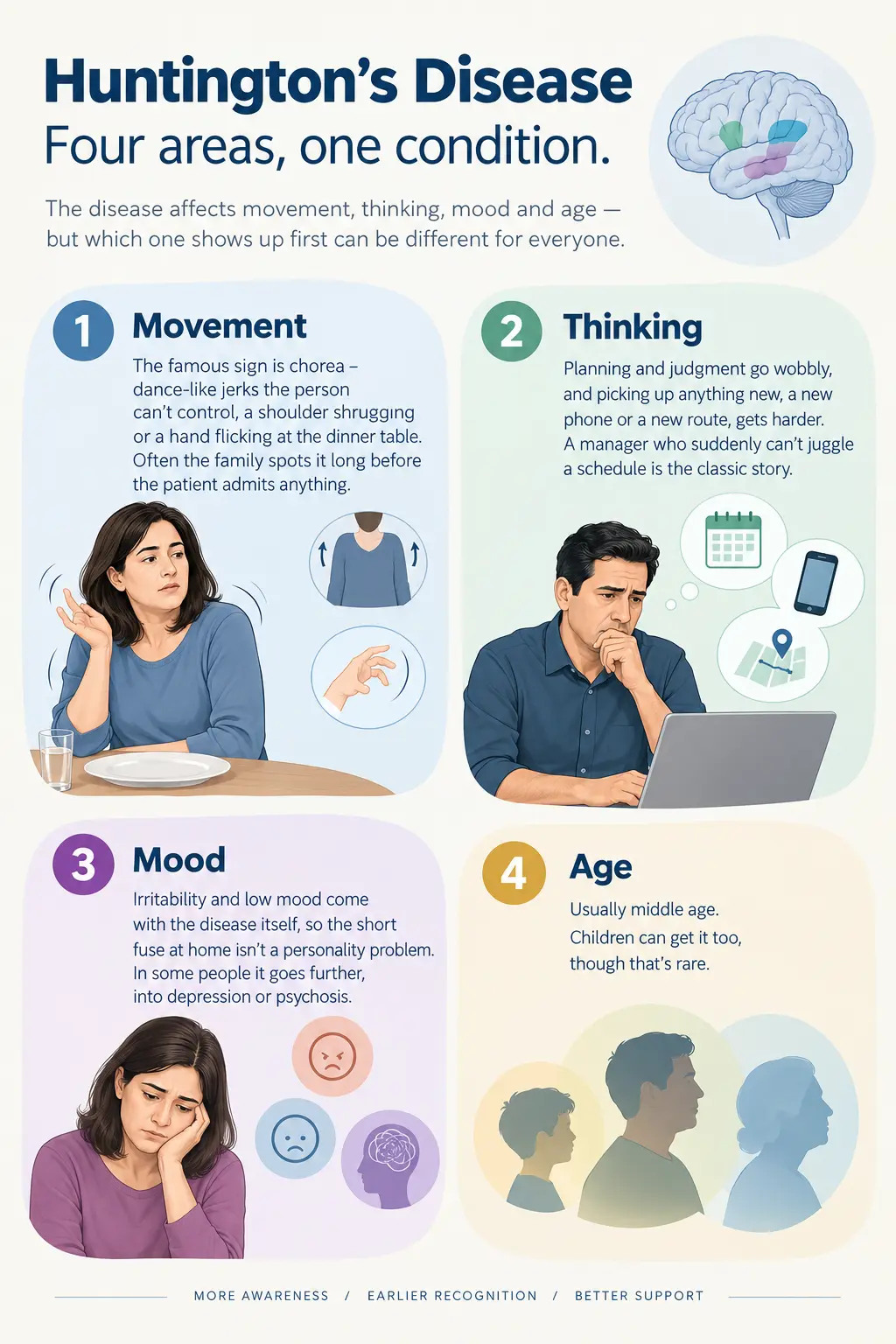
Jerky movements have many causes, which is why movement disorders clinics sort them out carefully.
How Does Huntington's Disease Run in Families?
Less mystery than people expect, and a lot more arithmetic.
Gene: A change in the HTT gene, where a stretch of DNA called CAG repeats far more often than it should. Thirty-six repeats or more means Huntington’s.
Chances: If your mother or father has it, you have a 50% chance of having inherited it, and your brother’s result tells you nothing about yours, since each child gets their own coin toss.
Grey zone: Someone with 27 to 35 repeats probably won’t develop Huntington’s themselves, but they could still hand the gene on to a child.
Testing: One blood sample is enough to count the repeats, and the answer can be a yes or a no, so people ideally sit down with a genetic counsellor before deciding whether they want to know.
Families ask the same thing about Parkinson’s, and whether Parkinson’s disease hereditary or caused by lifestyle gives a very different answer.
How Is Huntington's Disease Diagnosed and Treated?
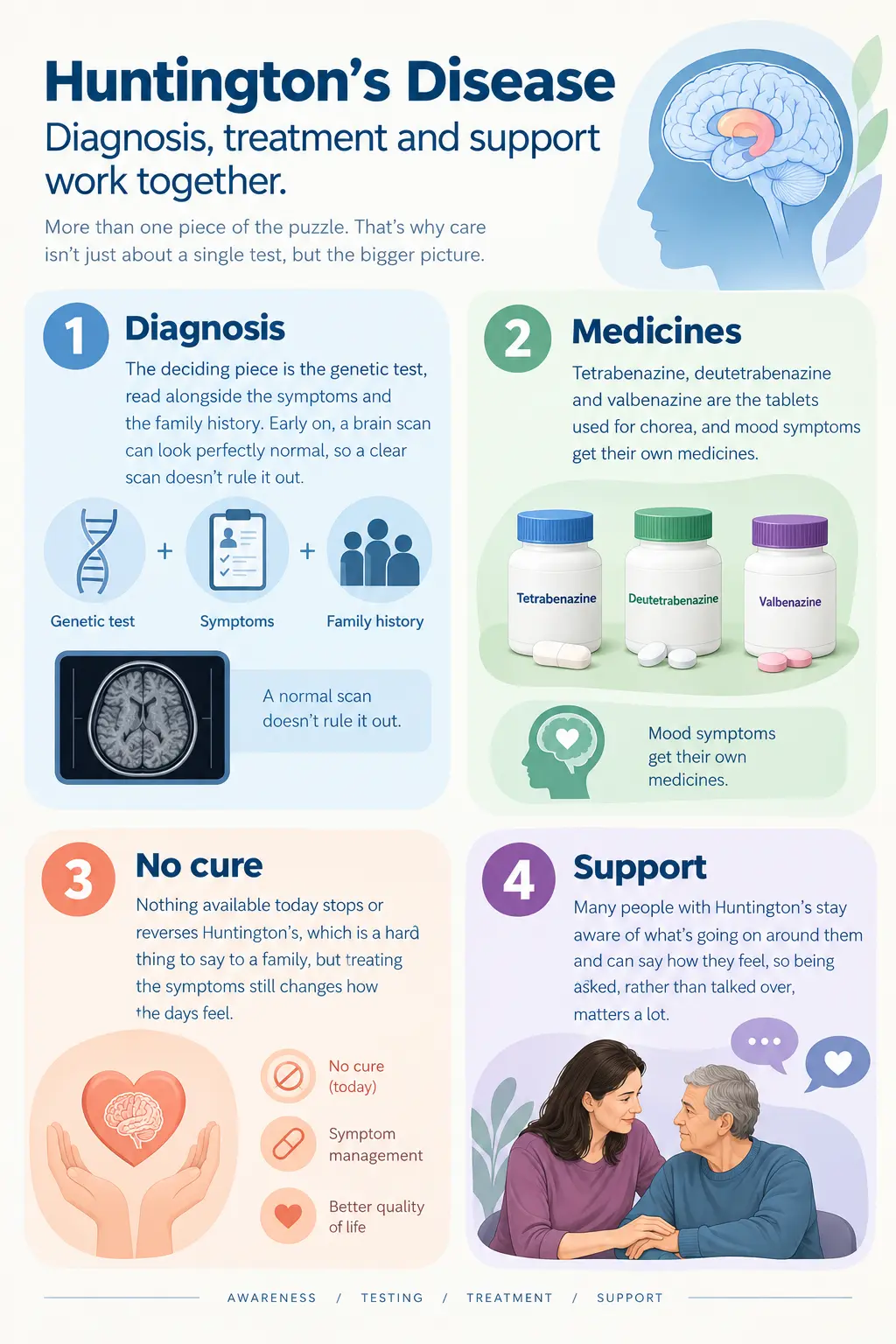
Thinking and memory changes are part of Huntington’s from the early stages, and they’re assessed under dementia treatment.
Key Takeaways
- Huntington’s is passed through families, and it hits movement, thinking and mood, though not always in that order.
- A child of an affected parent has a 50% chance of inheriting it, but each child’s result is independent.
- It usually starts in middle age, though a rare juvenile form exists.
- A blood test can confirm it, but talk to a genetic counsellor before taking it.
- There’s no cure yet, but medicines do help with jerky movements and low mood.
FAQ
Is Huntington's disease always inherited?
Yes. It comes from a change in the HTT gene that’s handed down from a parent.
If I have Huntington's disease, will my children get it?
Each child has a 50% chance of inheriting it, and it can go either way for each one.
At what age does Huntington's disease usually begin?
Mostly in middle age, with a rare juvenile form in children.
Can anything cure Huntington's disease?
Not yet. Nothing stops or reverses it, though medicines can ease chorea and low mood.