
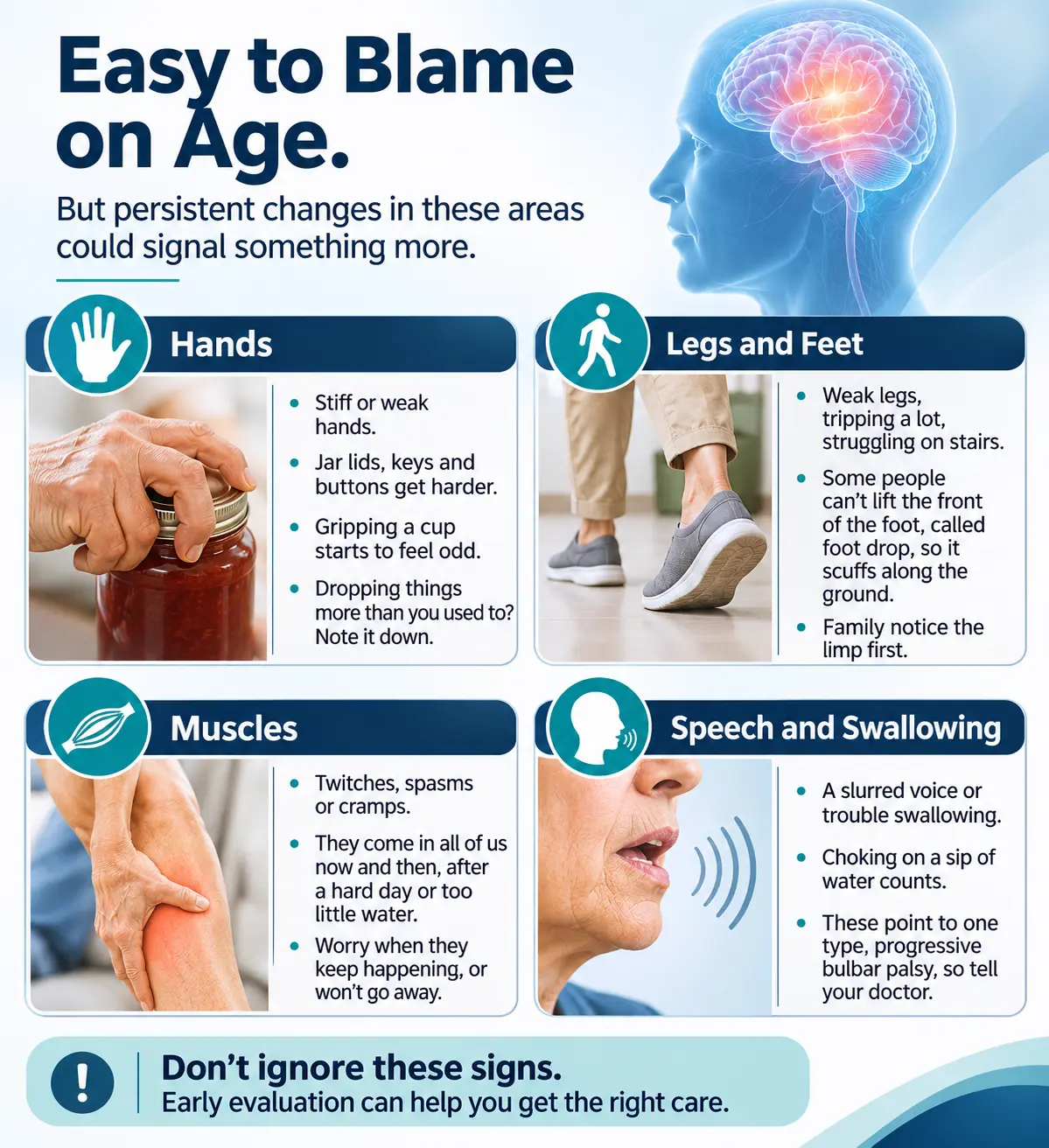
The early signs of motor neurone disease are predominantly motor: progressive weakness in the hands, foot drop, and persistent fasciculations or cramps in affected muscle groups. Onset is gradual, and symptoms are frequently attributed to ageing or physical fatigue. Isolated fasciculations and cramps are rarely pathological. Weakness that is progressive and unremitting warrants clinical evaluation.
According to Dr. Guruprasad Hosurkar, a Neurologist in Bangalore, motor neurone disease assessment: “Early motor neurone disease is easy to miss. A hand drops things, a foot catches on the step, and people blame age. Weakness that keeps growing should never be waved away.”
Hands or legs getting weaker?
Which Early Signs Should You Not Ignore?
Weakness that climbs up from the feet over days is a different problem, covered under Guillain-Barré syndrome treatment.
Who Gets Motor Neurone Disease, and Is It Inherited?
Not sure how MND differs from ALS? Read: Is motor neuron disease different from ALS.
What Determines the Right Treatment Approach?
It starts with finding out what’s really behind it.
Tests. A neurologist may order nerve function tests, an MRI and blood tests. These also rule out other conditions. Early on, MND can be hard to confirm, so you may need repeat visits.
Medicines. Riluzole may slow ALS. Other medicines ease stiffness, cramps, drooling and breathlessness. Each one is chosen for the symptom you have.
Therapies. Physiotherapy, diet advice, mobility aids and speech and language therapy all help daily life. A grab rail or a walking aid can keep you independent for longer.
Team. A care team reviews you every 2 or 3 months, so the plan changes as you do. Bring your questions, and a family member if you can.
There’s no cure yet. Trouble breathing, or weakness that hits suddenly? Don’t wait. See neurological emergencies and signs you need the ER.
FAQ
What are the first signs of motor neurone disease?
Weak or stiff hands, weak legs and feet, and muscle twitches or cramps. Weakness is the main sign.
Does motor neurone disease start with twitching?
Sometimes, but twitching alone is often harmless. It matters with weakness or muscle wasting.
Who gets motor neurone disease?
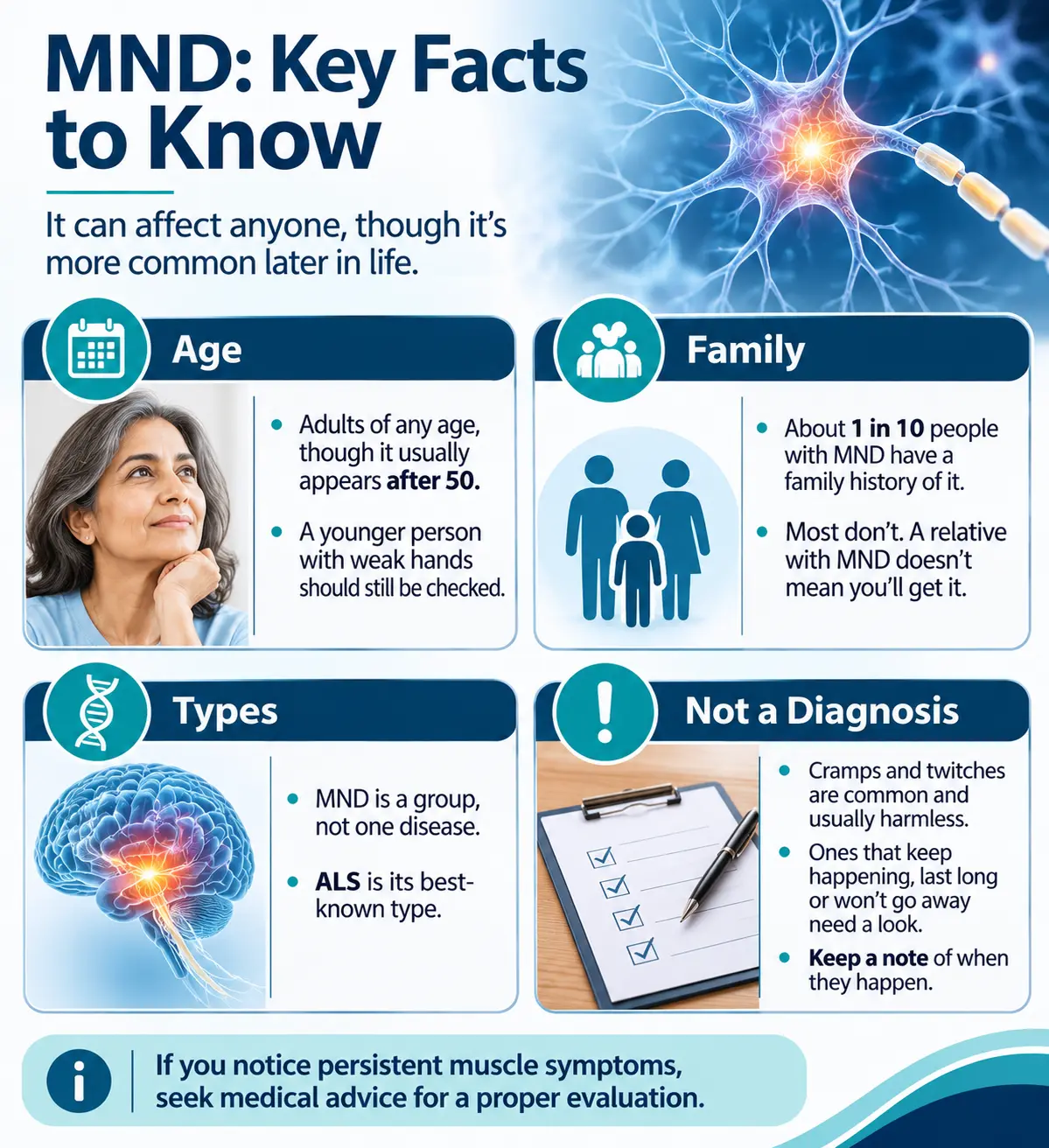
Adults of any age, but it usually appears after 50. About 1 in 10 people with MND have a family history.
Is there a cure for motor neurone disease?
No. Treatment can ease symptoms, and riluzole may slow ALS.