
A neurological emergency is any sudden problem in the brain, spinal cord, or nerves that can cause permanent damage within minutes to hours. Signs that need immediate ER attention: facial droop, one-sided weakness, slurred speech, a thunderclap headache, a seizure lasting over five minutes, and weakness spreading upward with breathing difficulty. Every minute of delay costs brain tissue in a stroke. When these signs appear, emergency care matters far more than an appointment.
According to Dr. Guruprasad Hosurkar, a leading neurologist in Bangalore, “When something neurological hits suddenly, treat it as an emergency, head to the ER, and contact us afterwards.”
Had a warning episode that passed on its own?
Which Sudden Symptoms Point to a Stroke or Brain Bleed?
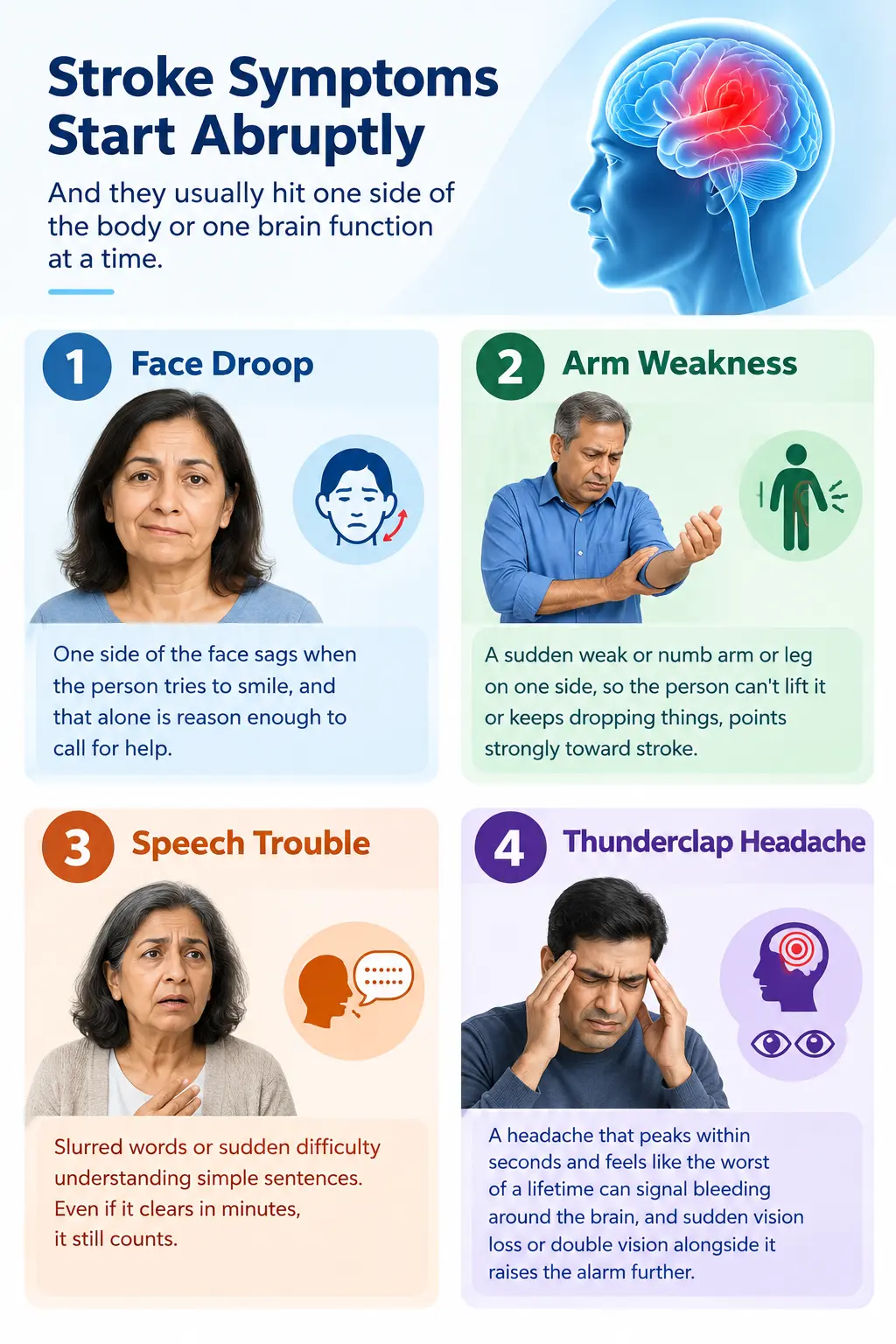
Clot-busting treatment works best within a few hours of onset, so waiting to see if it passes is the riskiest choice. Timely brain stroke treatment starts at the ER, not the clinic. And most people drive themselves in, which is usually the wrong call; ring 108 or 112 instead.
Which Other Neurological Symptoms Can't Wait Either?
Stroke isn’t the only condition where hours matter, and several other neurological problems need emergency care too.
Long Seizure: A convulsion lasting over five minutes, or seizures back to back without waking up in between, is status epilepticus and needs an ambulance.
Rising Weakness: Weakness that starts in the feet and climbs upward over hours to days, especially with trouble breathing or swallowing, can be Guillain-Barré syndrome.
Fever and Stiff Neck: Fever, severe headache, and a stiff neck together suggest meningitis, which can worsen fast.
Sudden Confusion: Abrupt confusion, odd behaviour, or unusual drowsiness in someone who was fine earlier deserves an ER visit, not a wait-and-watch approach. Especially after a head injury.
Ascending weakness in particular gets brushed off as tiredness. Our guide on Guillain-Barré syndrome emergencies explains when weakness crosses the line.
Why Choose Dr. Guruprasad Hosurkar?
Dr. Guruprasad Hosurkar has over 22 years of neurology experience and leads the Movement Disorders and Parkinson’s Disease Programme at KIMS Hospital, Mahadevapura. His practice also covers seizure treatment and follow-up care after stroke and other acute neurological events.
Patients who reach an ER within the first hour of a facial droop often walk out within days, while those who wait overnight frequently lose the treatment window. In an active emergency, call 108 or 112 first, not a clinic.
FAQ
Should I drive myself to the ER during a stroke?
No, call an ambulance since paramedics can alert the hospital early.
Can stroke symptoms that disappear be ignored?
No, a brief episode may be a TIA and needs urgent evaluation.
Which emergency number should I call in India?
Call 108 for an ambulance or 112 for general emergencies.
Is a first seizure always an emergency?
Seek help if it lasts over five minutes or breathing or injury follows.