
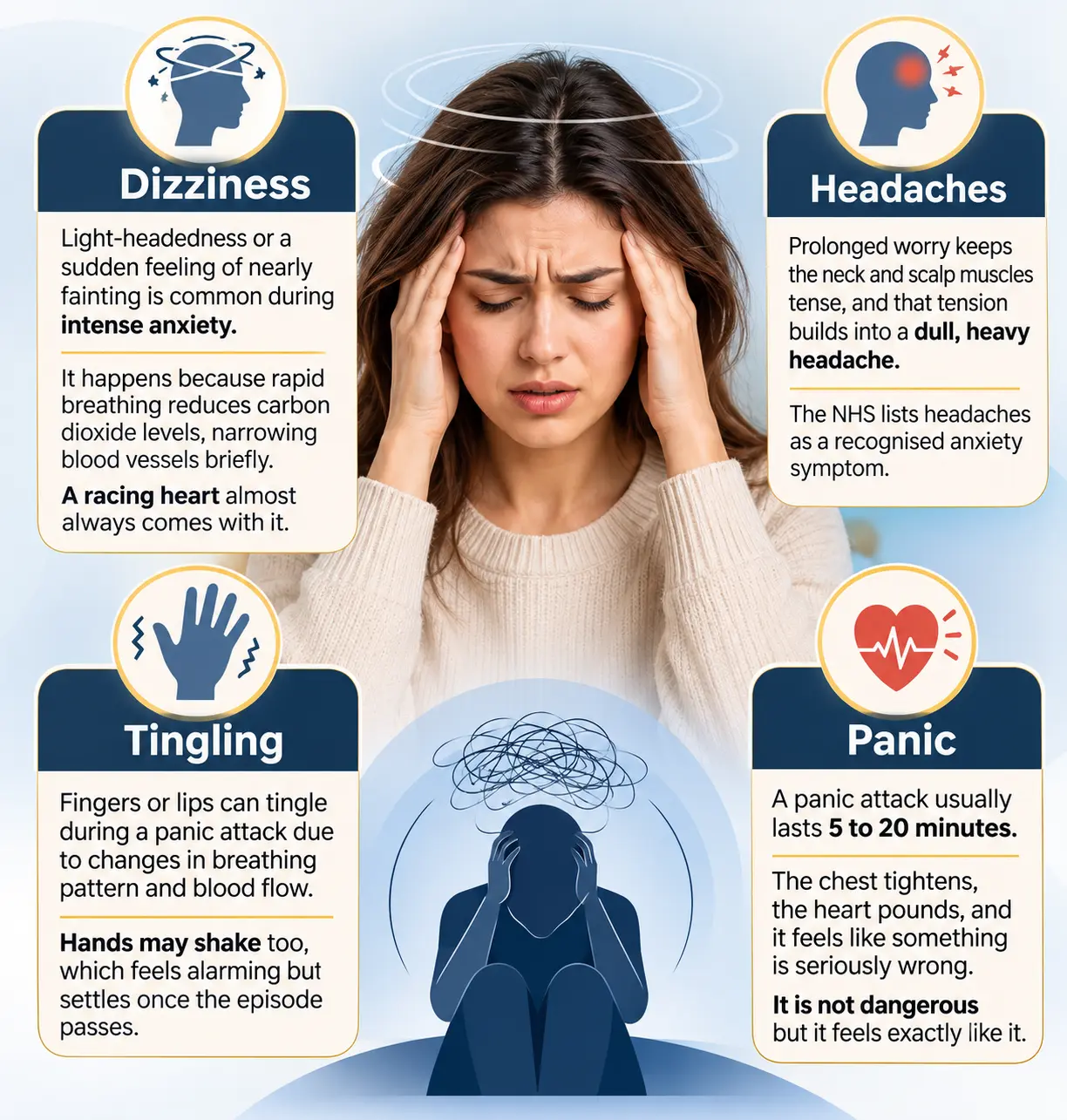
Yes. Anxiety can cause real symptoms that feel neurological: dizziness, headaches, shaking, tingling in the fingers or lips. They aren’t imagined. But the same symptoms can come from a nerve or brain problem, so don’t just assume. Get new or one-sided symptoms checked.
According to Dr. Guruprasad Hosurkar, a Neurologist in Bangalore, anxiety and neurological symptom assessment: “The tingling and the dizziness are real. They’re not in the patient’s head. My job is to make sure nothing else is behind them.”
Dizzy and tingling, and not sure why?
Which Symptoms Can Anxiety Cause?
Shaking that doesn’t go away is a different question, and it’s covered under movement disorders.
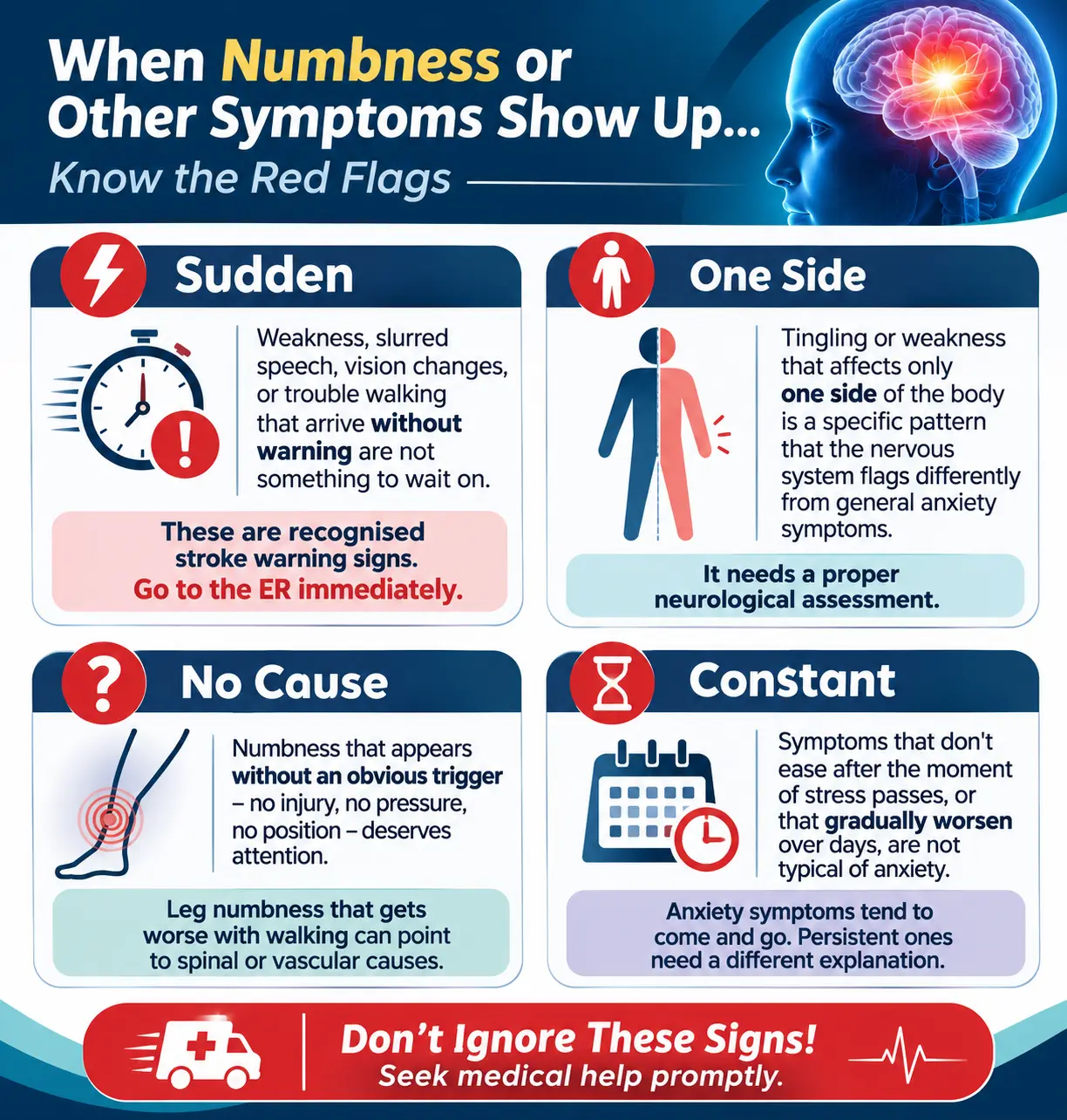
When Could the Same Symptoms Be Neurological?
Tingling can have many causes, such as why hands and feet tingle at night
What Determines the Right Treatment Approach?
First, find out what’s behind it.
Cause. A neurological exam is the starting point. If the examination raises questions, further tests nerve conduction studies, imaging, or blood work help identify whether a nerve or brain problem is involved. Treatment follows the finding, not the assumption.
Anxiety. If anxiety is confirmed as the cause, talking therapy, particularly cognitive behavioural therapy, has a strong evidence base. It addresses the thought patterns that keep the physical symptoms running. Speak to your doctor if coping feels difficult.
Self-help. Regular exercise steadies the nervous system over time. Eating at consistent times prevents blood sugar dips that worsen shakiness and dizziness. Slow, controlled breathing during an episode helps bring symptoms down. Alcohol and cigarettes both interfere with how the nervous system regulates itself; cutting them out makes a noticeable difference.
Both. Anxiety and a nerve problem can exist at the same time and are not mutually exclusive. In that case, each needs its own treatment plan. Treating only one while ignoring the other tends to leave symptoms partially unresolved.
Struggling to cope, or self-help isn’t working? See your doctor. Not sure it’s an emergency? Read neurological emergencies and signs you need the ER.
FAQ
Can anxiety cause tingling and numbness?
Yes. Fingers or lips often tingle during a panic attack. Numbness with no clear cause still needs checking.
Can anxiety cause dizziness and headaches?
Yes. Both are on the NHS list of physical anxiety symptoms.
How do I tell anxiety from a neurological problem?
Sudden weakness, slurred speech or one-sided numbness needs urgent care. A doctor can sort out the rest.
How long does a panic attack last?
Usually 5 to 20 minutes. It’s frightening, but it’s not dangerous.
References:
- NHS – Get help with anxiety, fear or panic
- MedlinePlus – Numbness and tingling