
Roughly 1 in 7 people worldwide live with migraine, and it is nothing like an ordinary headache: the pain usually sits on one side, throbs in rhythm with the pulse, and drags nausea and light sensitivity along with it, sometimes for three days straight before it finally lets go. Most patients assume they simply have to wait it out. They don’t. Once a doctor maps out what’s triggering the attacks and pairs that with the right medication, frequency and severity both tend to drop, often within a few months.
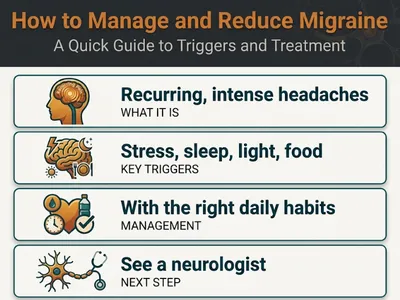
“Migraine is often dismissed as ‘just a headache,’ but it’s a distinct neurological condition with its own triggers and treatment pathway. The right combination of trigger management and medical treatment gives most patients real, lasting control over their attacks.”
Dr. Guruprasad Hosurkar, Neurologist, Bangalore
A proper evaluation is the fastest route to fewer, milder attacks. Consult Dr. Guruprasad Hosurkar
The triggers differ from person to person, but a few show up again and again.
What Triggers Migraine Attacks?
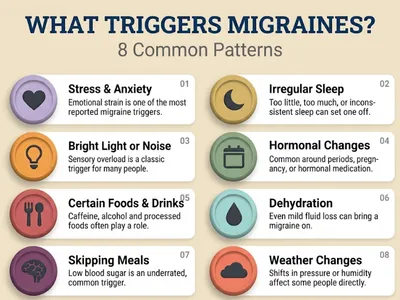
Ask ten migraine patients what sets off an attack and you’ll likely get ten different answers, which is exactly why identifying a patient’s specific trigger pattern, rather than reading from a generic list, is usually the first real step toward fewer attacks. That said, the eight below cover most of what shows up in clinical practice, in one combination or another.
Stress in particular is reported often enough on its own that it’s worth a closer look. A separate piece on how stress triggers or worsens migraine goes into the biological mechanism.
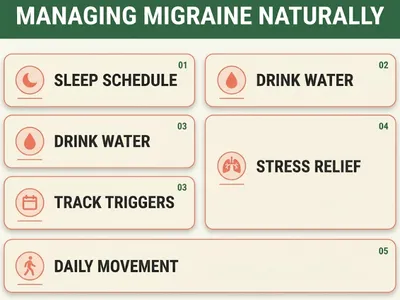
Daily habits rarely replace treatment, but they change how often attacks show up.
How Can You Manage and Reduce Migraine Naturally?
None of these five habits substitute for medical care when it’s genuinely needed, and no one should expect overnight results from any of them. But patients who stick with even two or three, consistently, for a couple of months, tend to see real change in both how often attacks happen and how severe they get.
A trigger-tracking plan built around your specific pattern is something a consultation can put together.
What happens in the first few minutes affects how long the rest of it lasts.
What To Do During a Migraine Attack?
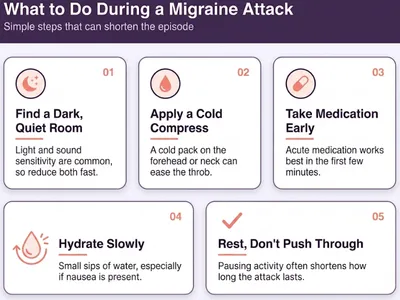
Most people try to push through: finish the meeting, drive home, get through the rest of the day. That instinct usually backfires. Acting early instead, and giving in to what the body is asking for, tends to shorten an attack considerably. Below are the five steps neurologists recommend most.
One exception worth flagging clearly: slurred speech, sudden weakness, or confusion during an attack is not typical migraine. That combination needs emergency care, not a dark room and water.
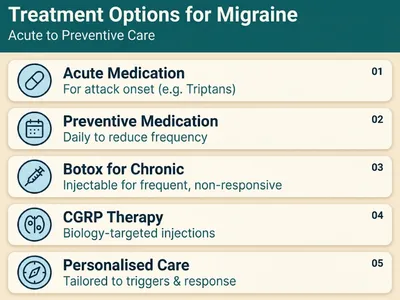
Treatment usually works on two fronts at once: stopping attacks and preventing them.
Medical Treatment Options for Migraine
Most patients, over time, end up on some mix of the two: something to take when an attack starts, and something else running in the background to keep attacks from starting as often. What that mix looks like depends heavily on how frequent and how severe the attacks already are.
When migraine keeps returning despite lifestyle changes and basic medication, Dr. Hosurkar’s migraine treatment program in Bangalore starts by mapping the individual pattern before deciding what comes next.
Migraine that hasn’t responded to standard treatment usually has a specific, identifiable reason.
Short answers to what patients ask most often.
FAQ
What is the main cause of migraine?
Genetics and brain chemistry set the baseline susceptibility; specific triggers like stress, sleep changes, or hormones set off individual attacks.
What foods should be avoided during migraine?
Aged cheese, alcohol, caffeine, and heavily processed or salted foods are the most commonly reported dietary triggers.
Is migraine a serious neurological condition?
It’s a recognized neurological condition, not just a bad headache, though most cases respond well to treatment.
What is the fastest way to get relief from migraine pain?
Medication taken at the very first sign, combined with a dark, quiet room, works fastest for most people.
Can migraine be permanently cured?
Not permanently cured, no, but most patients reach long stretches with few or no attacks under the right treatment plan.