About one in seven stroke patients in India is now under 45, because high blood pressure, diabetes, tobacco use, poor sleep and chronic stress start much earlier than they used to. Heart defects, clotting disorders and torn neck arteries add to the count, and they’re often missed since nobody expects a stroke at 30. Hypertension still leads the list of identifiable causes in this age group.
According to Dr. Guruprasad Hosurkar, a leading Neurologist in Bangalore, “The biggest delay I see in young patients is that they blame a sudden headache, giddiness or a weak hand on tiredness and wait it out.”
Worried about stroke risk factors at a young age?
Why Are Strokes Increasing in Young Indians?
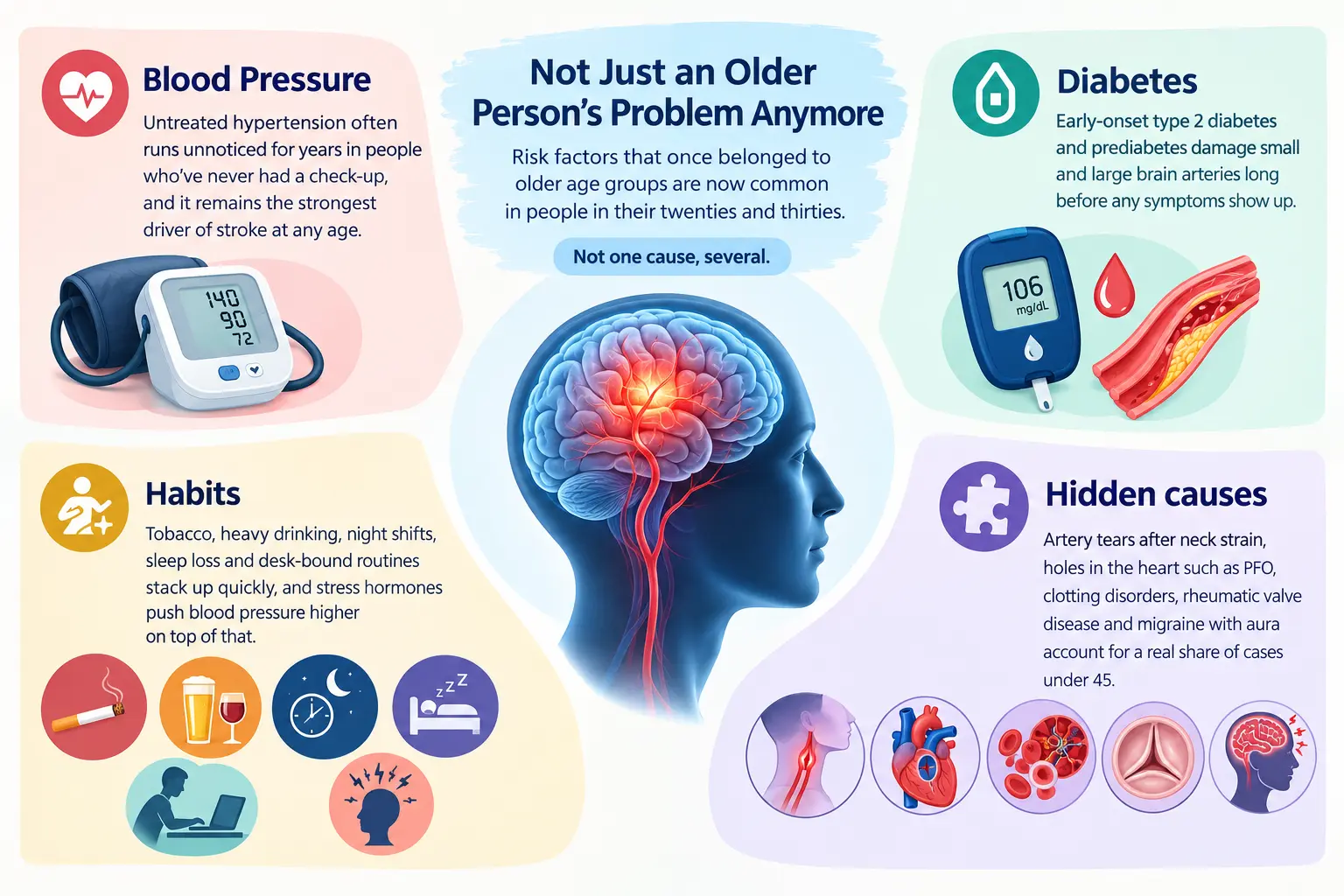
And because these triggers overlap, one person often carries three or four of them without knowing, which is why a structured approach to migraine headache treatment starts with identifying which triggers are active before deciding what to treat.
What Are the Warning Signs of Stroke in Young Adults?
Stroke symptoms come on suddenly and look the same at any age. Minutes matter.
- Face: One side droops or feels numb, and the smile comes out uneven when the person tries to smile.
- Arm: Sudden weakness or heaviness in one arm or leg, often showing up as a dropped cup or a stumble, points strongly to stroke.
- Speech: Slurred words, trouble finding the right word or difficulty following a simple sentence can appear without any pain at all.
- Vision: Sudden dimming or loss of sight in one eye, double vision, severe giddiness, or the worst headache of one’s life should be treated as an emergency.
So the rule is simple: reach a stroke-ready hospital within hours, because clot-busting treatment works only in a narrow window. It’s worth noting how often the first guess is gastric trouble or stress, which is exactly why recognising the signs early matters. For what comes after, read more on stroke rehabilitation and what recovery actually involves.
Why Choose Dr. Guruprasad Hosurkar?
Dr. Guruprasad Hosurkar is a DNB-qualified neurologist with over 22 years of experience, DBS training in Germany, and leadership of the Movement Disorders and Parkinson’s Disease Programme at KIMS Hospital, Mahadevapura, with deep expertise in movement disorder treatment.
Young patients get a proper hunt for the cause, with brain and vessel imaging plus heart and clotting evaluation where needed, followed by a clear prevention plan. Waiting for symptoms to repeat isn’t a strategy.
FAQ
Can a 25-year-old really have a stroke?
Yes, though it’s less common, and causes often differ from older adults.
What is the most common cause of stroke in young adults?
High blood pressure leads, followed by heart conditions, artery tears and clotting disorders.
Can young stroke patients recover fully?
Many recover well with early treatment and rehabilitation, though outcomes depend on stroke severity.
Which tests help find the cause of stroke at a young age?
MRI brain, vessel imaging, heart evaluation, and blood tests for clotting and sugar.