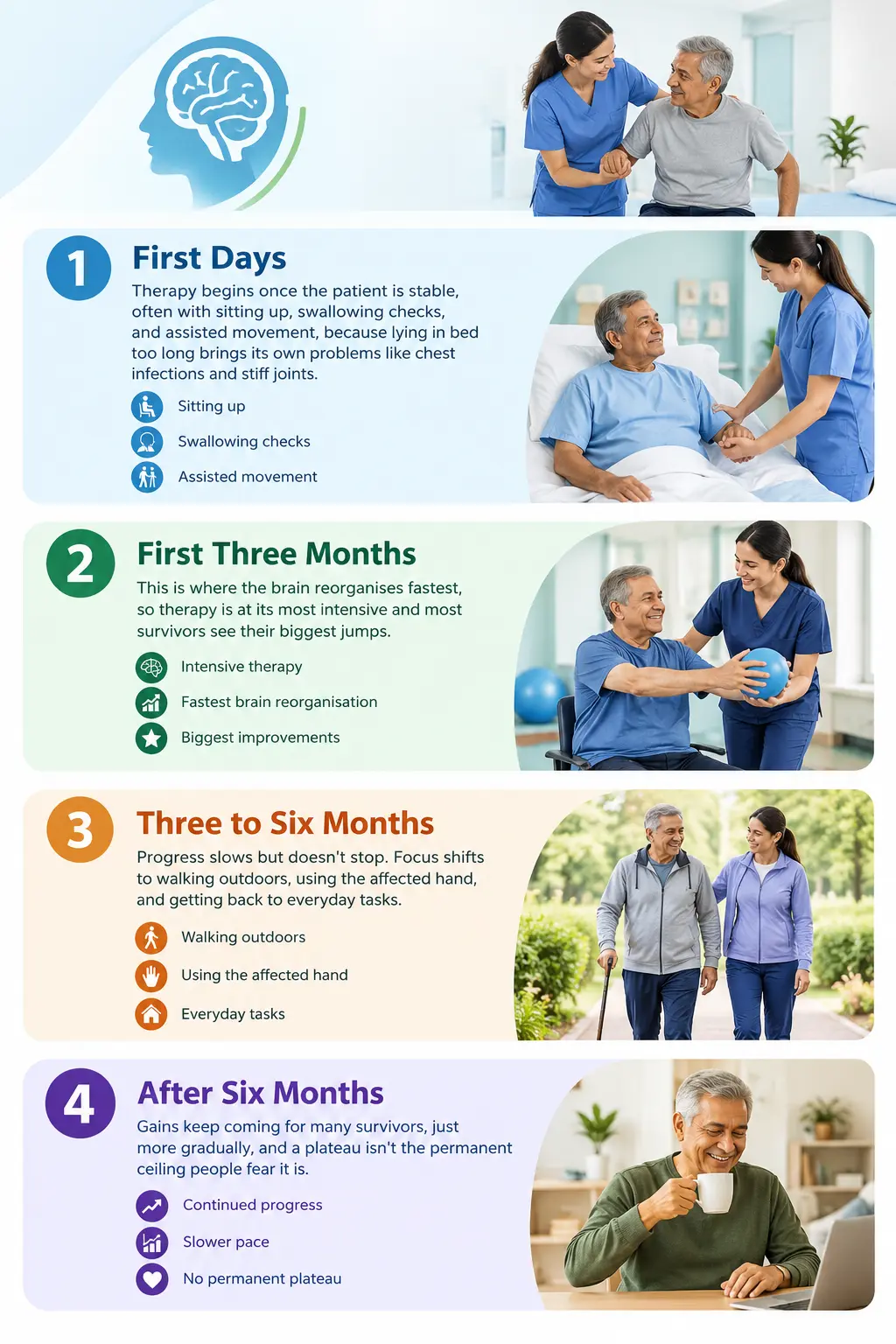
Stroke rehabilitation combines physiotherapy, occupational therapy, and speech therapy beginning within 48 hours of a stable stroke and continuing for months. The fastest gains come in the first three months, with slower improvement possible well past six. It works by helping the brain rewire around damaged areas through repeated, task-specific practice. Results vary with stroke size, location, and how early treatment began. Consistent daily practice is the biggest factor within a survivor’s control.
According to Dr. Guruprasad Hosurkar, a leading neurologist in Bangalore, “Recovery follows effort, and the survivors who practise a little every day usually outpace those who wait for one big session.”
Unsure what recovery should look like for your family member?
What Does the Stroke Recovery Timeline Actually Look Like?
Memory and thinking problems can show up after a stroke too, and they’re assessed through the same pathways used in dementia treatment.
Which Therapies Do Stroke Survivors Actually Need?
Most survivors need several kinds of therapy at once, because a stroke rarely damages just one ability.
Physiotherapy: Repetitive, task-specific practice of walking, balance, and getting up from a chair retrains motor pathways, and the amount of practice matters more than any single technique.
Occupational Therapy: Dressing, eating, and writing get relearned, often with the weaker hand, alongside home changes that keep someone safe.
Speech Therapy: It covers both language difficulty and swallowing, and unsafe swallowing caught early prevents serious chest infections.
Spasticity Care: Tight, stiff muscles can be eased with stretching, splints, or botulinum toxin injections when they start limiting movement.
Low mood affects roughly one in three survivors and slows progress, so it’s treated as part of rehab, not an afterthought. Getting to hospital early sets up everything else, and our piece on how quickly stroke treatment must begin explains why.
Why Choose Dr. Guruprasad Hosurkar?
Dr. Guruprasad Hosurkar holds an MBBS, MD in Internal Medicine, and DNB in Neurology, with over 22 years of experience at KIMS Hospital, Mahadevapura. His practice pairs stroke follow-up with spasticity and tone management through movement disorder treatment.
Survivors who start structured therapy early and keep practising daily regain more independence in walking and self-care than those who wait. Rehab isn’t a phase you finish, it’s a routine you build. Don’t wait for a plateau before asking for help.
FAQ
How long does stroke recovery take?
Most gains occur in three to six months, with slower progress afterward.
Can stroke survivors keep improving after six months?
Yes, improvement often continues with regular, focused practice.
Does stroke rehab have to happen in a hospital?
Early rehab does; later therapy can continue at home with guidance.
Is fatigue normal after a stroke?
Yes, post-stroke fatigue is common and usually improves gradually.