
Parkinson’s disease is a neurological condition that results in impaired motor abilities. Although it can be managed through medications at its early stage, some individuals experience worsening of their symptoms such as increased tremors, muscle stiffness, slowing of body movements or difficulty walking.
As explained by Dr. Guruprasad Hosurkar, an esteemed neurologist in Bangalore, worsening symptoms do not necessarily indicate the failure of the treatment. It is essential to evaluate different factors, including changes in the disease process, the response to medication, and the individual symptoms.
Dr. Guruprasad Hosurkar is a specialist in Parkinson’s disease, movement disorders, and deep brain stimulation treatment. With ample experience in dealing with movement disorders, he offers the most effective Parkinson’s disease treatment in Bangalore.
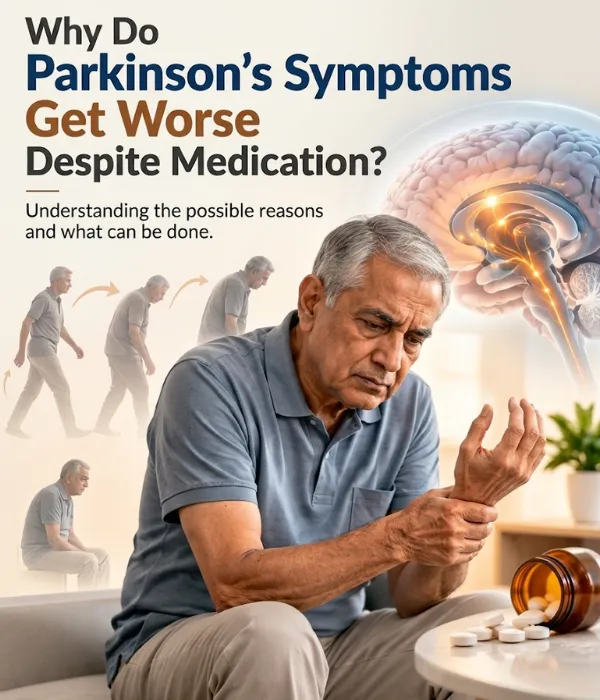
Are your Parkinson’s symptoms getting worse despite medication? Let’s understand how the disease progresses and affects treatment response.
Understanding Parkinson’s Disease and How It Progresses
Parkinson’s disease occurs due to the gradual loss of dopamine-producing nerve cells in the brain. Dopamine plays an important role in controlling smooth and coordinated movements. As the disease progresses, changes in brain function can lead to increasing symptoms despite ongoing treatment.
In the early stages, medications such as levodopa often provide significant improvement. However, as Parkinson’s disease progression continues, the brain’s ability to store and use dopamine may reduce, causing fluctuations in symptom control.
Common reasons for symptom changes include:
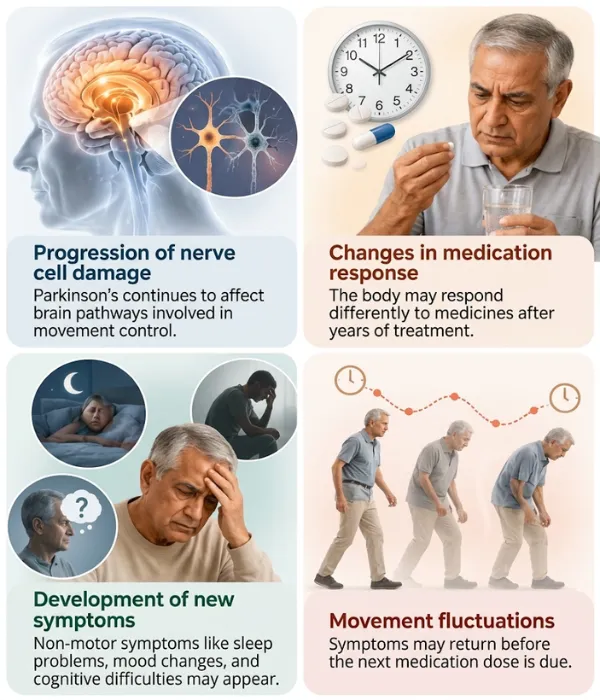
Regular monitoring by a specialist helps identify these changes early and modify treatment when required.
Are symptoms returning even after taking medicines regularly? Let’s explore the signs that may indicate changing treatment needs.
Signs That Parkinson’s Medication May Not Be Controlling Symptoms Effectively
When the medication for Parkinson’s becomes less effective, patients may notice changes in their movement control and daily functioning. Such symptoms can develop gradually and every patient may experience them differently.
Some common signs include:
Other than movement symptoms, patients may also experience sleep problems, anxiety, depression or changes in memory.
In order to understand the cause of the symptoms, one should get a thorough evaluation.
Why do symptoms return before the next medicine dose? Let’s explore the reason behind wearing-off episodes in Parkinson’s disease.
What Is Wearing-Off in Parkinson’s Disease?
Wearing-off is a common issue seen in people who have been taking Parkinson’s medication for several years. It occurs when the benefit of a medication dose reduces before the next dose is taken.
During the early stages, the brain can store dopamine and maintain stable movement control. As Parkinson’s progresses, this ability decreases, causing medication effects to become shorter.
Symptoms of wearing-off may include:

Dr. Guruprasad Hosurkar, regarded as one of the best neurologist in Bangalore, may manage wearing-off by adjusting medication timing, changing medicines, or adding other treatment options based on the patient’s condition.
In some advanced cases, therapies such as Deep Brain Stimulation treatment may be considered to improve movement control and reduce medication-related complications.
Does reduced medication response mean symptoms cannot be managed? Let’s discover the available options for better symptom control.
Can Parkinson’s Symptoms Be Controlled When Medicines Are Less Effective?
Even when Parkinson’s medication becomes less effective, several treatment approaches can help manage symptoms. The goal is to improve movement, reduce complications, and support independence.
Treatment options may include:

The suitability of each treatment depends on factors such as symptom severity, overall health, medication response, and disease stage.
When Should You Consult a Neurologist for Worsening Parkinson’s Symptoms?
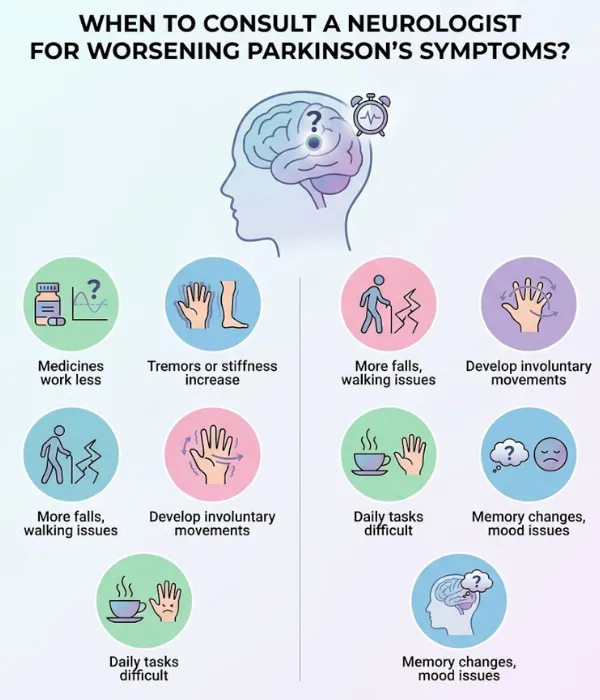
Patients with Parkinson’s disease should seek medical advice when symptoms begin affecting daily activities or quality of life. Regular follow-ups allow specialists to monitor disease changes and modify treatment plans.
A neurological evaluation may be needed if:
- Medicines no longer provide the same relief
- Tremors or stiffness become difficult to control
- Walking problems or falls increase
- Involuntary movements develop
- Daily activities become challenging
- New symptoms like memory changes or mood issues appear
Dr. Guruprasad Hosurkar, an eminent movement disorder specialist in Bangalore, can assess symptom patterns, review medication effectiveness, and recommend appropriate treatment options. He specializes in managing Parkinson’s disease and movement disorders with a comprehensive approach that includes medical management, rehabilitation guidance, and advanced treatment options when required.
FAQs
1. Does Parkinson's medication stop working over time?
Parkinson’s medication may become less effective over time as the disease progresses. Treatment adjustments can help manage changing symptoms.
2. Can Parkinson's symptoms improve after increasing medication?
Yes, symptoms can improve after a dosage increase. However, any medication changes should only be made under a specialist’s guidance, never on your own.
3. Can exercise help slow Parkinson's progression?
It won’t cure the disease, but staying active can genuinely help with mobility, balance, strength, and day-to-day activities.
4. Can lifestyle changes help manage worsening Parkinson's symptoms?
Healthy lifestyle habits, exercise, proper sleep, and stress management can support symptom management along with medical treatment.
5. Why do Parkinson's patients develop walking difficulties despite medication?
Walking problems may develop due to disease progression or symptoms that respond less effectively to medication.
6. What are the early signs of Parkinson's disease progression?
Increasing stiffness, slower movements, balance problems, and reduced medication effectiveness may indicate progression.
Reference links:
https://www.parkinsons.org.uk/information/drugs/side-effects/dyskinesia-wearing-off
https://www.mayoclinic.org/diseases-conditions/parkinsons-disease/diagnosis-treatment
Disclaimer: The information shared in this content is for educational purposes and not for promotional use.