
MS relapses happen when the immune system attacks the myelin sheath, causing neurological symptoms lasting at least 24 hours. Infections trigger up to 30% of relapses, but physical stress, heat, hormonal shifts, and missed DMT doses are also common culprits. Note that not every flare is a true relapse fever or fatigue can cause pseudorelapses without new demyelination.
According to Dr. Guruprasad Hosurkar,a leading neurologist in Bangalore, “A confirmed relapse needs neurological evaluation quickly waiting it out without assessment often delays treatment that can meaningfully reduce the severity of the attack.”
Noticing sudden changes in vision, limb strength, or balance?
Why Do Infections Trigger MS Relapses So Often?
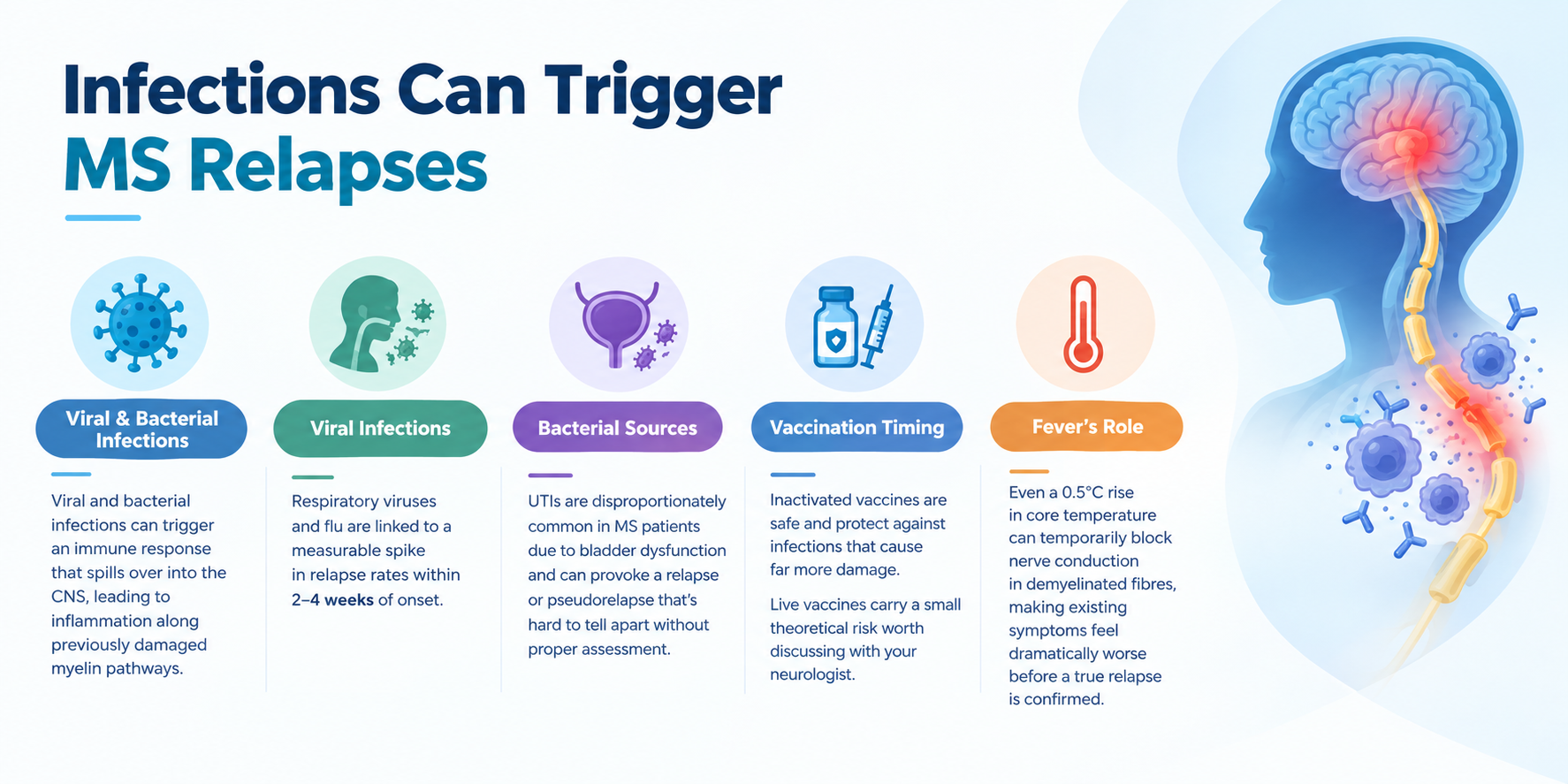
Staying current on flu shots and treating infections early are among the most practical steps MS patients can take a point central to Multiple Sclerosis Treatment in Bangalore and reducing relapse frequency overall.
What Lifestyle Factors Push the Immune System Toward a Relapse?
Infections get most of the attention, but chronic stress, poor sleep, extreme heat, and skipped medication consistently lower the threshold at which the immune system tips into an inflammatory episode.
- Psychological Stress: Chronic stress dysregulates the immune response in ways studies link to higher relapse rates over the following weeks, not just hours.
- Heat Exposure: Uhthoff’s phenomenon temporarily worsens symptoms but isn’t a relapse. Prolonged overheating can sometimes tip into one, especially during summer or after intense exercise without adequate cooling.
- Missed Medication: Even a few days’ gap in high-efficacy DMTs has been associated with rebound inflammation and, in rare cases, severe rebound relapses that are harder to treat.
- Sleep Deprivation: Poor sleep suppresses regulatory T-cells that prevent the immune system from attacking self-tissue MS patients who sleep badly show more inflammatory activity on MRI over time.
Managing these factors consistently keeps the immune system in the steadiest possible state between clinic visits which is why lifestyle counselling is built into Parkinson’s Disease Treatment in Bangalore and broader neurological care protocols alike.
Why Choose Dr. Guruprasad Hosurkar?
Dr. Guruprasad Hosurkar is a neurologist in Bangalore with over 22 years of experience in neurology, holding a Diplomate of National Board in Neurology and specialised training in movement disorders and neuroimmunology. He currently serves as Director and Clinical Lead of Neurology at KIMS Hospital, Mahadevapura, and has been recognised by the Economic Times as Neurologist of the Year for South India.
His patients with MS don’t just get their relapses managed they get a plan that reduces how often those relapses happen. That difference matters far more over years than any single treatment decision.
FAQ
What counts as a true MS relapse vs. a pseudorelapse?
A true relapse lasts more than 24 hours without fever or infection; a pseudorelapse is symptom worsening caused by heat, fatigue, or illness.
How quickly should I contact a neurologist after a suspected relapse?
Contact your neurologist within 24 to 48 hours early steroid treatment can shorten relapse duration and reduce severity.
Can pregnancy trigger an MS relapse?
Pregnancy often reduces relapse rates, but the postpartum period carries a significantly higher relapse risk in the first three months.
Is it possible to prevent MS relapses entirely?
Relapses can’t be fully eliminated, but high-efficacy DMTs reduce relapse frequency by 50 to 68% compared to no treatment.