Telemedicine handles follow-up care, medication adjustments, symptom reviews and report interpretation for many neurological conditions, while acute events and hands-on examinations still need a hospital. Video consultations work best when the diagnosis is already established and the goal is monitoring. Stable epilepsy, Parkinson’s disease, migraine, sleep disorders and early memory concerns fit that group, but a brand-new problem isn’t one to handle by video alone.
According to Dr. Guruprasad Hosurkar, a leading Neurologist in Bangalore, “A video call tells me a lot about tremor, walking and medication response, but it can’t replace a hands-on exam when something new or sudden shows up.”
Not sure whether your symptoms can wait for a video visit?
Which Neurological Conditions Can Be Managed Through Telemedicine?
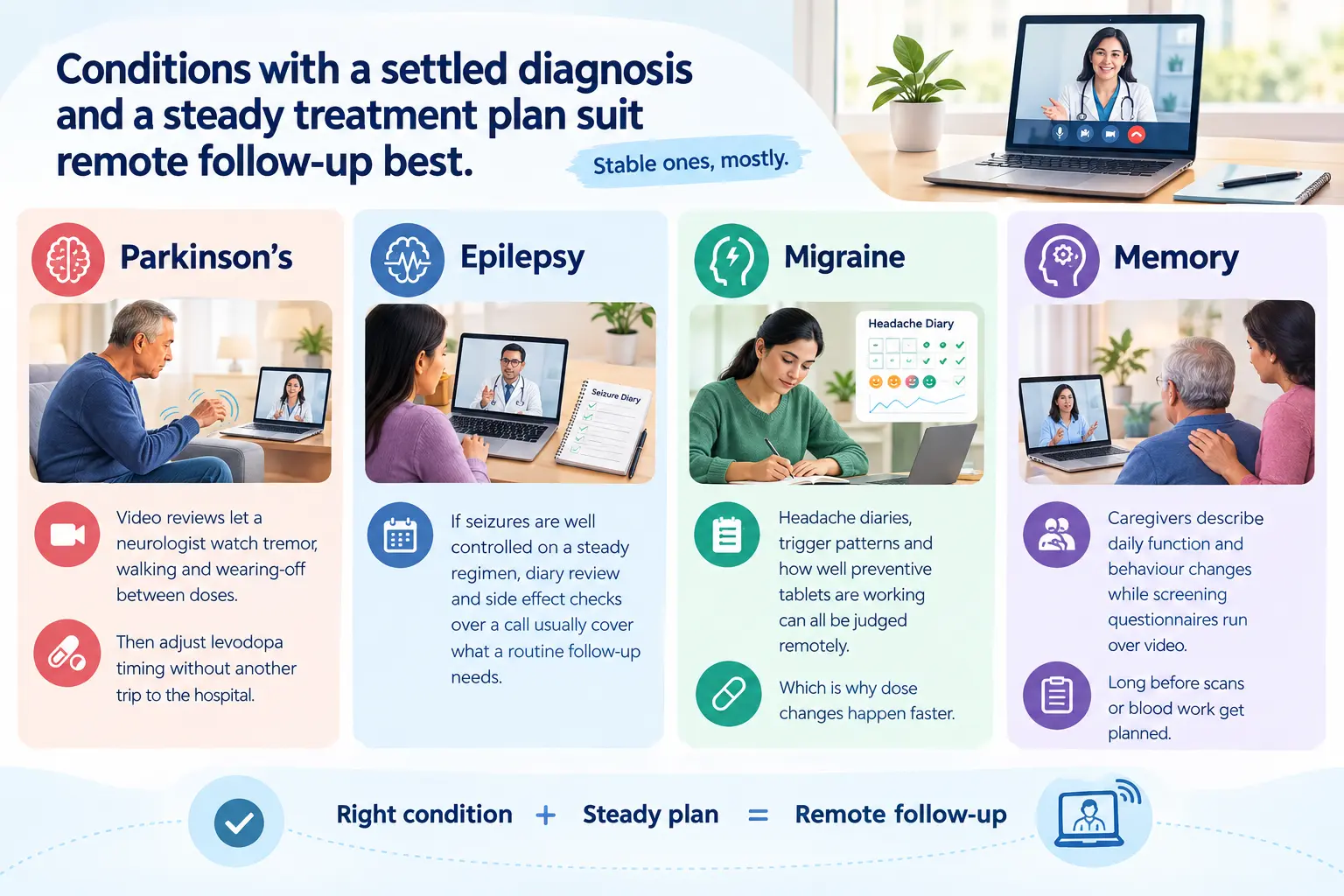
And sleep disorders, neuropathy reviews, and post-stroke medication checks follow the same pattern once reports are shared ahead of time. This applies to ongoing conditions like Parkinson’s disease treatment too, where medication adjustments need regular review.
What Still Needs an In-Person Neurology Visit?
Not everything, though. Certain problems can’t be judged without touch, equipment or immediate testing.
- Emergencies: Sudden weakness, facial droop, slurred speech, a first seizure or a thunderclap headache need an emergency department within minutes, and no scheduled call can safely replace that.
- Examination: Reflexes, sensation, eye movements and muscle tone need a physical exam, which often separates a confident diagnosis from an educated guess.
- Procedures: DBS programming, botulinum toxin injections, EEG, nerve conduction studies and lumbar puncture all depend on equipment and a trained team in the room.
- New symptoms: Fresh complaints like progressive numbness or unexplained falls usually need an in-person assessment and imaging before any remote follow-up makes sense.
So the practical rule is video for monitoring and the clinic for diagnosis and it’s odd how often that order gets reversed. Knowing when neither option applies and emergency care is needed instead is covered in neurological emergencies.
Why Choose Dr. Guruprasad Hosurkar?
Dr. Guruprasad Hosurkar is a DNB-qualified neurologist with over 22 years of experience, DBS training in Germany, and leadership of the Movement Disorders and Parkinson’s Disease Programme at KIMS Hospital, Mahadevapura, with deep expertise in movement disorders treatment.
Patients leave with a clear plan, either a video follow-up schedule or a hospital-based workup, and stable patients travel far less. Guesswork isn’t part of it.
FAQ
Can epilepsy be managed through video consultations?
Yes, when seizures are controlled and the treatment plan is stable.
Is telemedicine suitable for a first neurological consultation?
Usually not, because a hands-on neurological examination is needed first.
Which documents should I keep ready for an online neurology visit?
MRI or CT reports, current prescriptions, seizure or headache diaries, and recent blood tests.
Can Parkinson's medication be adjusted during a video visit?
Yes, after reviewing symptoms, timing charts and side effects, doctors can fine-tune doses.