
That tiny flicker in your calf or eyelid has a name, fasciculation, and you’ve probably had one this week. Most of the time it’s nothing at all. Skipped sleep and one chai too many will do it. The NHS puts it plainly: very rarely serious. Rarely isn’t never, though. A twitch that hangs around, spreads, or turns up alongside weakness is the one to get looked at.
According to Dr. Guruprasad Hosurkar, a Neurologist in Bangalore, muscle twitching evaluation: “A twitch on its own rarely tells me much. What I listen for is weakness, because twitching with weakness is a different conversation.”
Calf or eyelid still flickering after weeks?
So What Sets Off a Twitch?
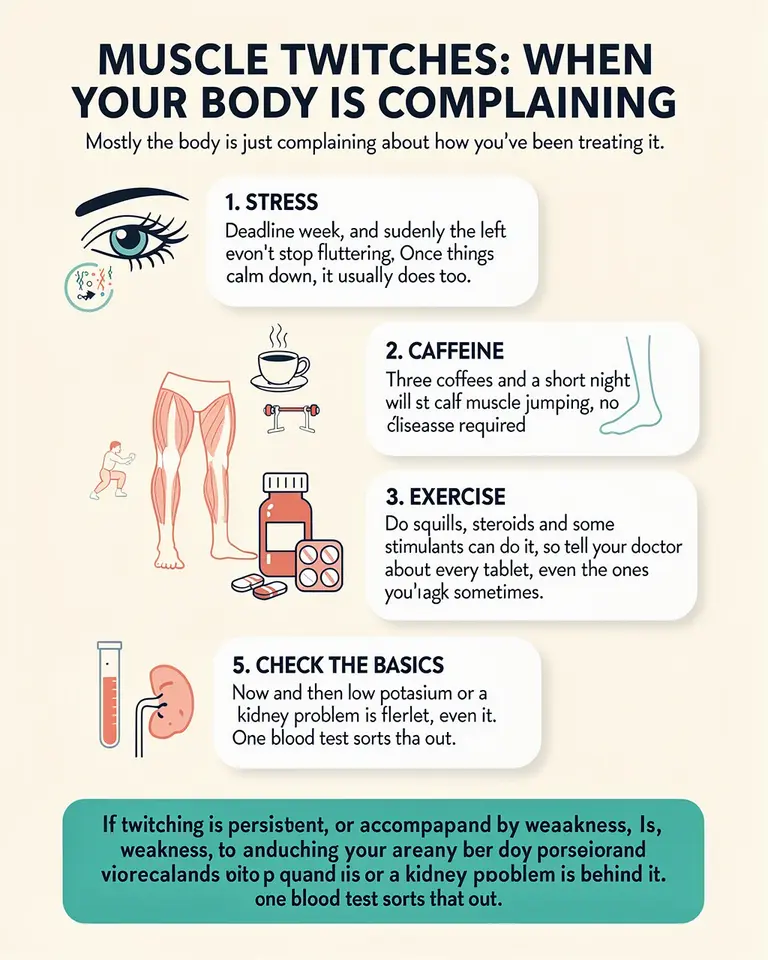
Anything bigger than a flicker, like a jerk or a spasm, is a different animal and belongs under movement disorders.
Which Twitches Are Worth Worrying About?
Some twitches shouldn’t be left to sort themselves out.
Weakness: a hand that has started dropping cups, or a leg that gives out on the stairs. This is the big one.
Duration. The same twitch for more than two weeks? The NHS says go and see someone.
Spread. It’s jumping in the arm now, and the thigh too, not just that one stubborn eyelid.
Wasting. One thumb looks thinner than the other, or a patch of skin has gone numb.
ALS, nerve damage, and spinal muscular atrophy are the rare ones. Few people have them, yet they’re why doctors don’t just say “stress” and send you home.
How Are Persistent Muscle Twitches Diagnosed and Treated?
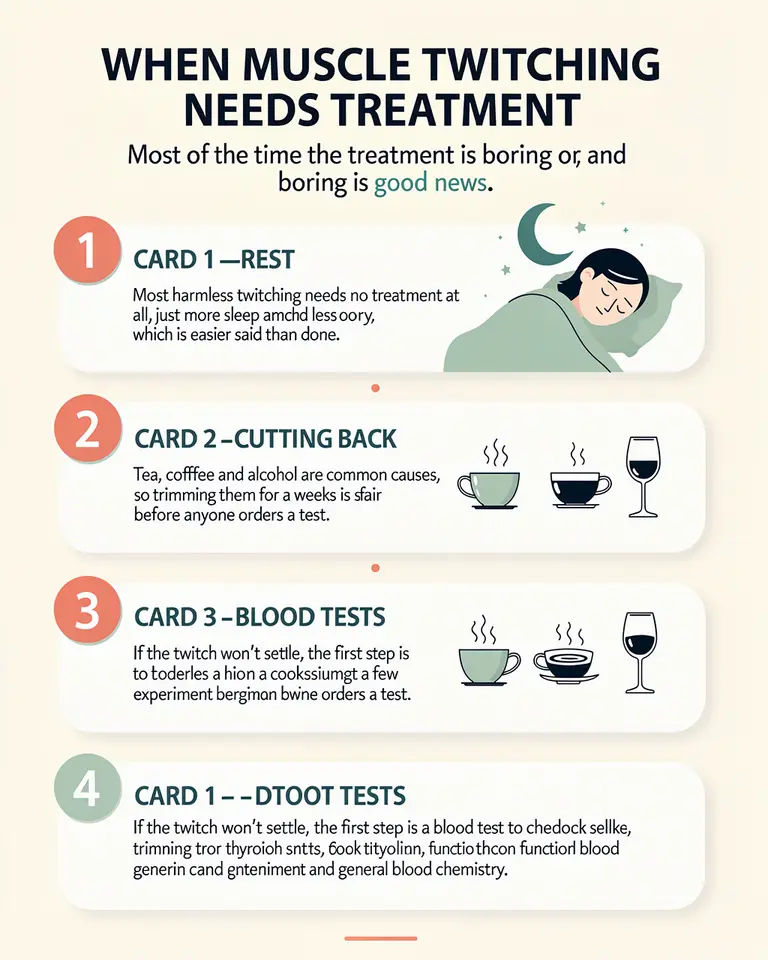
One more thing: if you suspect a prescribed medicine is causing it, don’t stop it on your own; ask your doctor first, as muscle weakness can sometimes be a neurological problem like myasthenia gravis.
Key Takeaways
- Most twitches are harmless, though tiredness, stress or too much caffeine can bring them on.
- A twitch lasting more than two weeks, or jumping in several places, deserves a doctor’s visit.
- Weakness is the real warning sign, so a hand dropping cups matters more than any amount of flickering.
- ALS and nerve damage are rare, but they’re the reason a persistent twitch gets checked.
- Blood tests come first and an EMG only if something doesn’t add up, and never stop a prescribed medicine on your own.
FAQ
Is a muscle twitch serious?
Rarely. Stress, tiredness, caffeine, and hard exercise cause most of them.
How long can a twitch go on before I should worry?
More than two weeks, or twitching in several places, is worth a doctor’s visit.
Does anxiety make muscles twitch?
It can. Stress is a common trigger, and twitching often fades when it does.
Which tests check persistent twitching?
Blood tests come first. After that, maybe an EMG, nerve conduction studies or an MRI.