
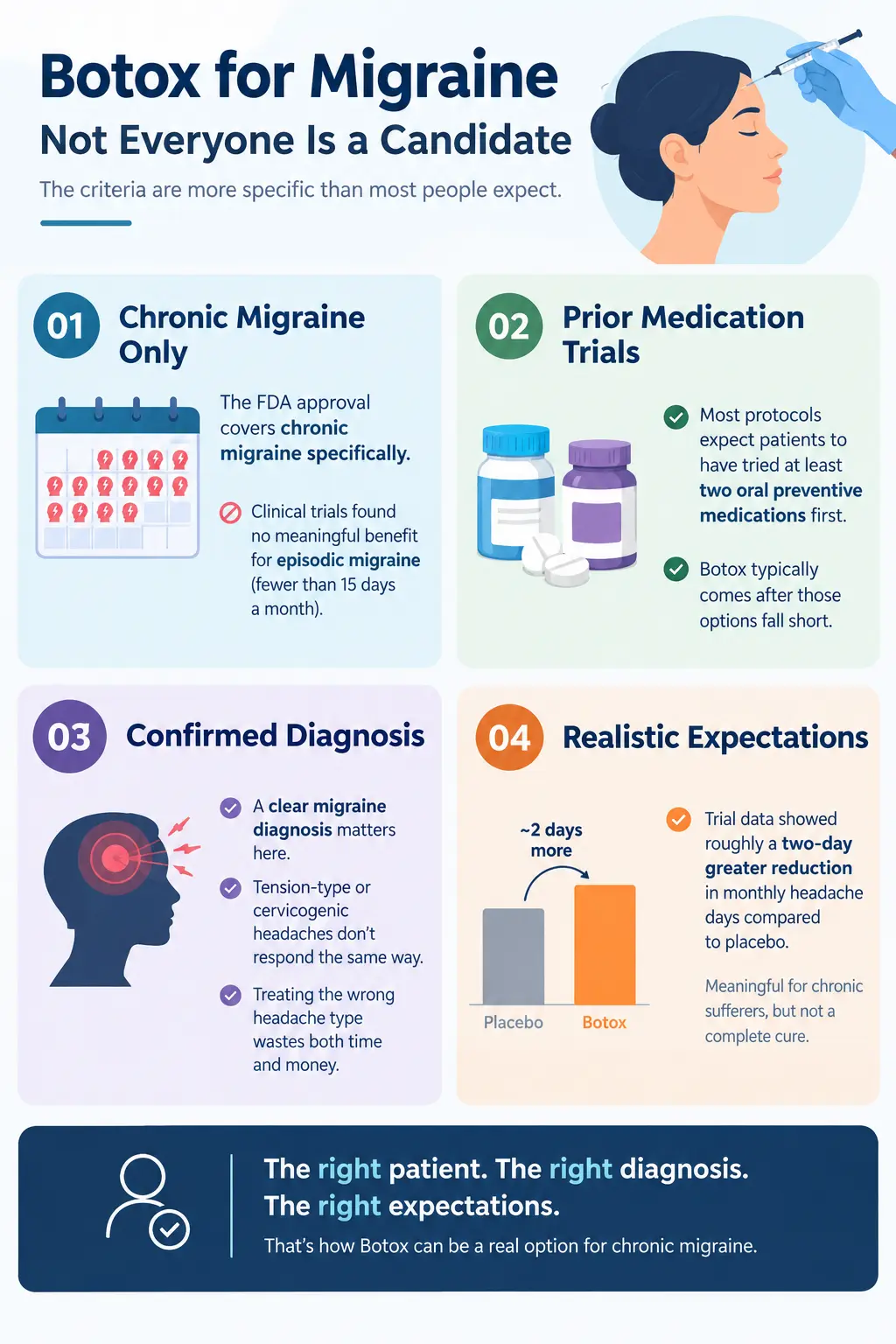
Botox for migraine (onabotulinumtoxinA) is FDA-approved for chronic migraine with fifteen or more headache days a month, with migraine features on at least eight. It isn’t effective for episodic migraine. Treatment involves roughly thirty injections across the forehead, temples, head, neck, and shoulders every twelve weeks. It works by blocking pain-signalling chemicals at nerve endings, not just relaxing muscles. Most patients need two to three cycles before knowing whether it’s working.
According to Dr. Guruprasad Hosurkar,a leading neurologist in Bangalore, “Patients often expect relief after one session; the real answer usually shows up only after the second or third cycle.”
Getting fifteen or more headache days a month despite medication?
Who Actually Qualifies for Botox as a Migraine Treatment?
Staying current on flu shots and treating infections early are among the most practical steps MS patients can take a point central to Multiple Sclerosis Treatment in Bangalore and reducing relapse frequency overall.
What Actually Happens During and After a Botox Session?
The procedure itself is quick, but what happens over the following weeks matters more.
- The Injection Session: Around thirty-one to thirty-nine injections go into specific muscle sites across the head and neck, and the whole session usually takes fifteen to twenty minutes.
- Onset Takes Time: Relief doesn’t show up immediately; most patients notice a real difference two to four weeks after the first session, not the next day.
- Repeat Cycles: Injections repeat every twelve weeks, and skipping or delaying a cycle often lets headache frequency creep back up before the next round.
- Side Effects Stay Mild: Neck discomfort or mild injection-site soreness is common and temporary, while noticeable eyelid drooping is rare when injections are placed correctly.
Botox is one option among several once oral medication stops working well enough, and it’s typically reserved for chronic cases. Our piece on chronic migraine’s long-term effects on the brain explains why getting chronic migraine under control matters beyond just the pain itself.
Why Choose Dr. Guruprasad Hosurkar?
Dr. Guruprasad Hosurkar has delivered Botulinum Toxin injections for movement disorders and chronic migraine for over 20 years, with expertise that extends into the same movement disorder treatment programme he leads at KIMS Hospital, Mahadevapura.
One patient had 22 headache days a month before starting treatment; by the third cycle, that dropped to roughly 10. Botox rarely erases migraine completely, but for the right chronic patient, cutting headache days in half changes daily life.
FAQ
Is Botox approved for occasional migraine?
No, it’s approved only for chronic migraine, not episodic cases.
How soon does Botox work for migraine?
Most patients notice change two to four weeks after the first session.
How often are Botox migraine injections repeated?
Typically every twelve weeks, for ongoing benefit.
Does Botox cure migraine completely?
No, it usually reduces frequency rather than eliminating migraine entirely.