
You wake up. Your eyes are open but your body won’t move. That’s sleep paralysis: a temporary state where movement and speech shut off right at the edge of sleep or waking. Terrifying in the moment, but on its own, almost always harmless and over within seconds to minutes.
According to Dr. Guruprasad Hosurkar, a Neurologist in Bangalore, sleep paralysis assessment: “It feels like the worst moment of your life, but the body isn’t being harmed. What I want to know is how often it happens and why.”
Explore the symptoms, triggers, and health implications of sleep paralysis to know when to seek expert advice.
What Happens During Sleep Paralysis?
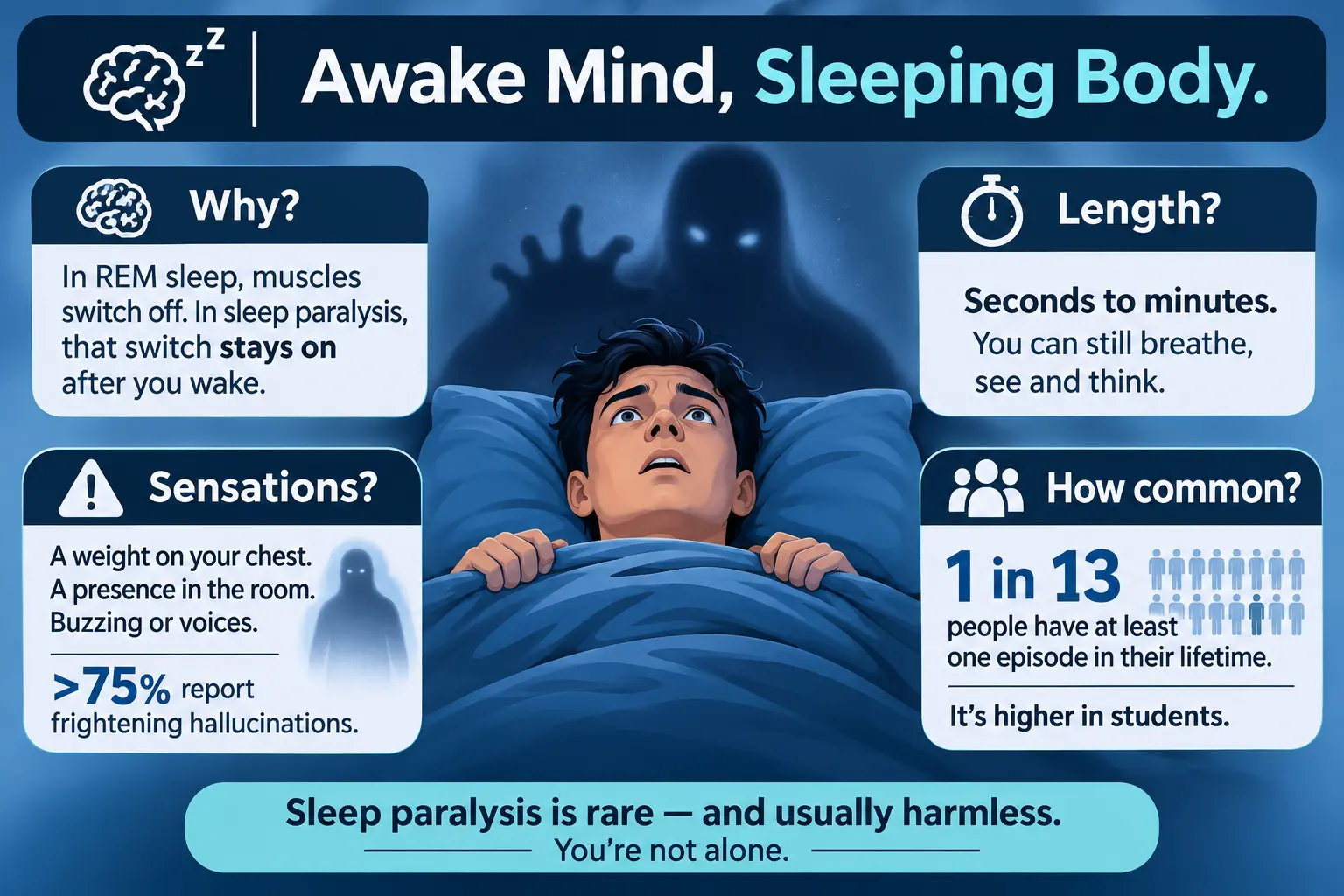
Sleep that goes wrong in other ways is covered under neurological sleep disorders.
Is Sleep Paralysis Harmful?
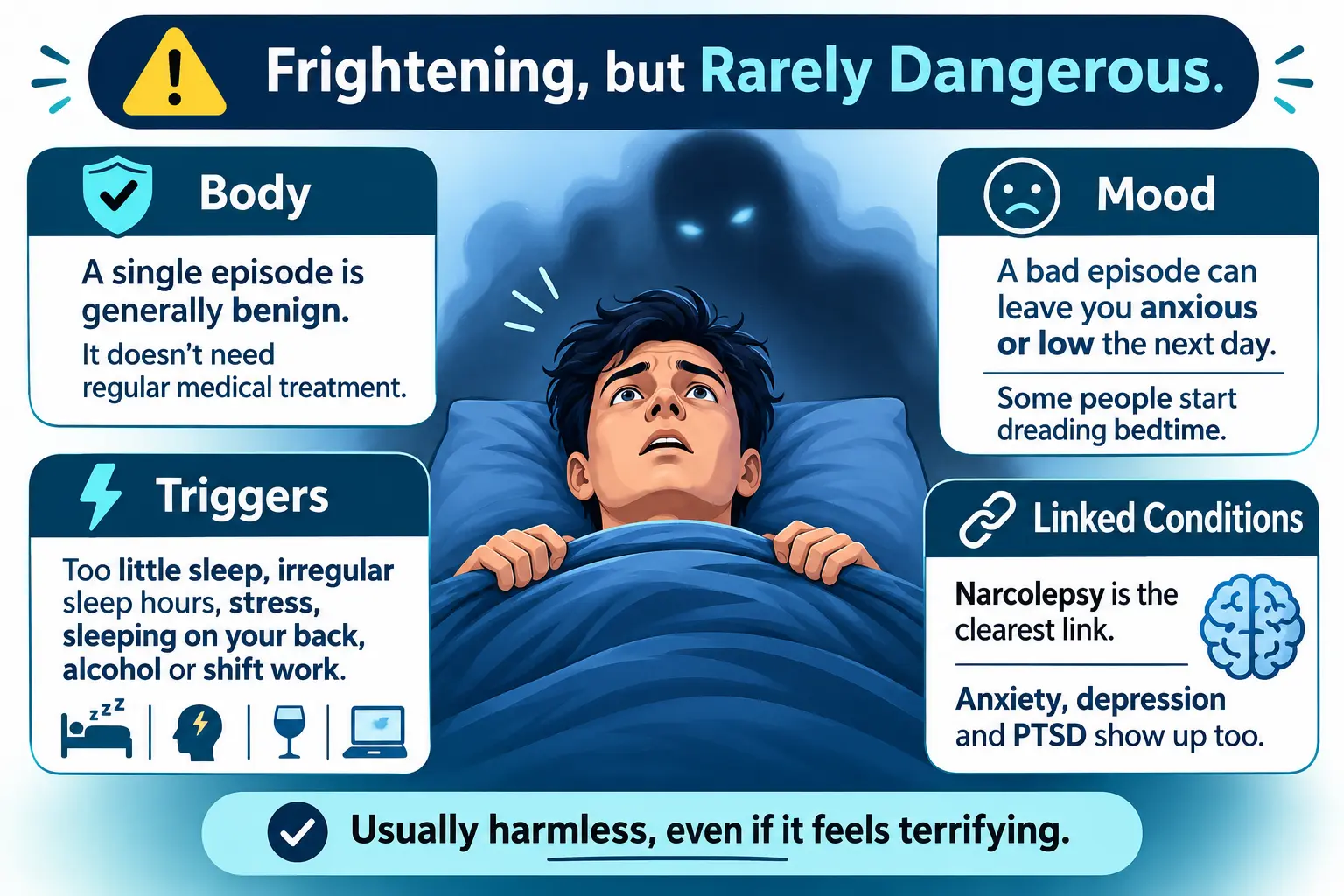
The wider link between sleep and the brain is explained by how sleep disorders are connected to neurological health.
What Determines the Right Treatment Approach?
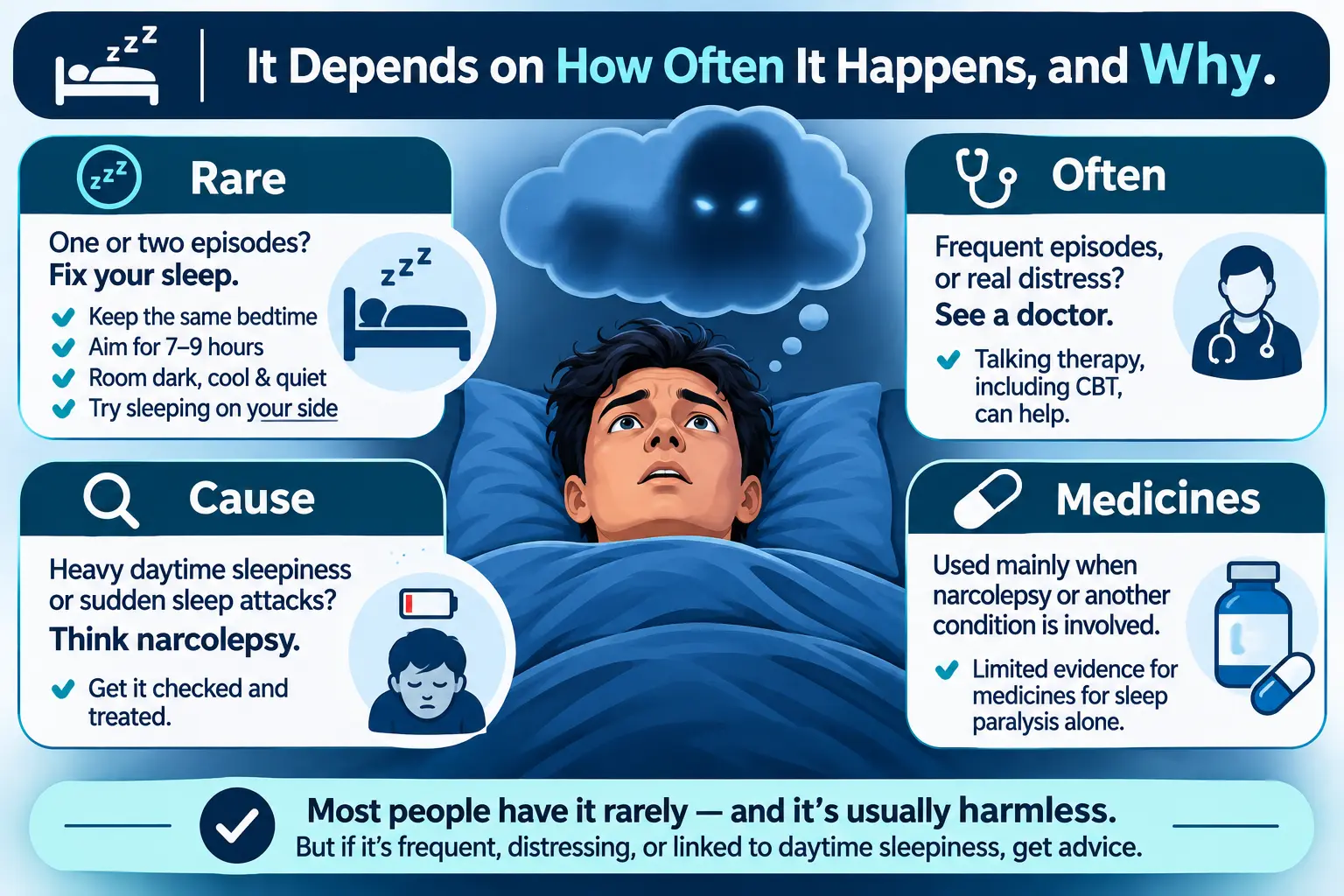
Other night-time trouble, like a crawling urge to move your legs, is covered in restless leg syndrome.
FAQ
What causes sleep paralysis?
Your muscles stay switched off after you wake from REM sleep. Poor sleep and stress make it more likely.
Is sleep paralysis dangerous?
Usually not. It passes in seconds to minutes. Frequent episodes are worth a check.
Can sleep paralysis be a sign of narcolepsy?
Sometimes. It’s the most clearly linked condition, especially with heavy daytime sleepiness.
How do I stop sleep paralysis?
Regular sleep, enough hours, less stress and sleeping on your side often help. See a doctor if it keeps happening.