
Post-COVID vertigo is most commonly vestibular neuritis inflammation of the balance nerve in the inner ear. BPPV is the second most frequent cause. In long COVID, dysautonomia can mimic vestibular symptoms entirely. Two theories explain the mechanism: direct viral invasion of the inner ear, or collateral damage from reduced oxygen and blood vessel changes during illness. Either way, recovery takes longer than after a standard viral labyrinthitis and that shows up clearly on balance testing.
According to Dr. Guruprasad Hosurkar, a leading Neurologist in Bangalore, “Post-COVID dizziness isn’t always true vertigo, and figuring out which one it is changes the entire treatment plan.”
Still dizzy weeks after COVID-19 cleared up?
What Actually Causes Vertigo After COVID-19?
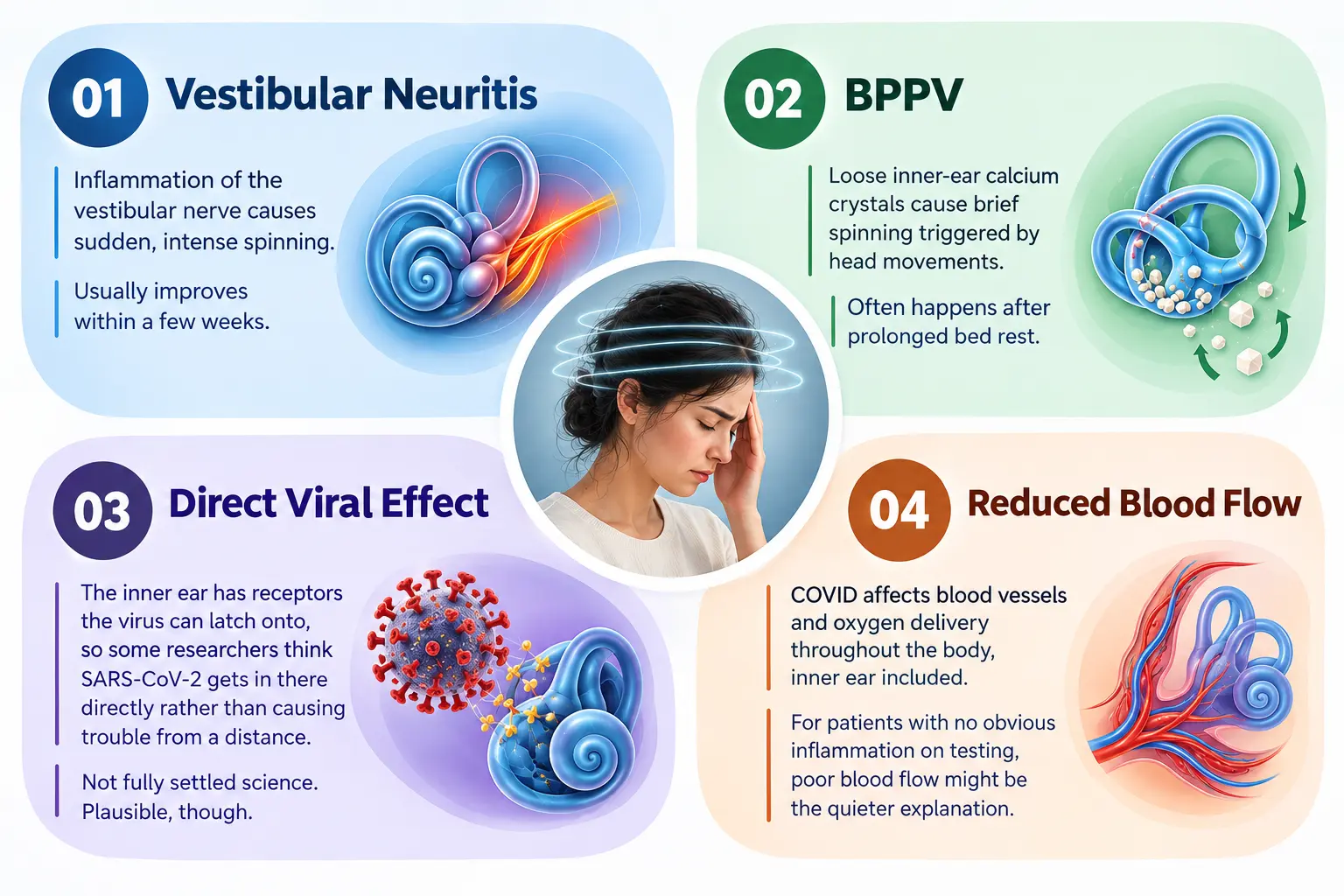
None of this changes the treatment much, honestly. Whether COVID triggered the neuritis or something else did, the approach stays the same: vertigo treatment, repositioning manoeuvres for BPPV, vestibular rehab exercises to speed up the brain’s recalibration.
Is It True Vertigo or Just COVID-Related Dizziness?
Not everyone who says “vertigo” after COVID actually has vertigo. Mislabeling it sends people down the wrong treatment path entirely.
- Orthostatic dizziness: Stand up too fast and feel the world tilt that’s probably dysautonomia, not the inner ear. Completely different workup, completely different treatment.
- Anxiety-driven dizziness: A lot of post-pandemic dizziness had nothing to do with the ears. Health anxiety alone produced waves of dizziness complaints researchers called it the pandemic effect, and it’s real even without physical damage.
- Central red flags: Vertigo alongside double vision, slurred speech, or one-sided weakness needs an ER visit, not a wait-and-see approach. Central vertigo from COVID affecting the brainstem is rare but documented.
- Slower recovery: Vestibular neuritis after COVID takes longer to resolve than the same condition triggered by a different virus. A slow recovery doesn’t automatically mean something has gone permanently wrong.
Knowing what doesn’t trigger a relapse matters just as much as knowing what does. Our piece on recent advances in MS treatment covers how far disease-modifying options have come for keeping relapses controlled in the first place.
Why Choose Dr. Guruprasad Hosurkar For Post-Covid Vertigo Care?
Dr. Guruprasad Hosurkar built a dedicated Vertigo Lab and vestibular rehab programme at KIMS Hospital, Mahadevapura, and he’s been doing this for over twenty-two years. His process always starts the same way: rule out anything dangerous first. That’s the same red-flag screening from when vertigo signals something serious, and only after that does a post-viral or dysautonomia diagnosis come into play.
A patient once walked in fully convinced her post-COVID dizziness meant permanent brain damage. Turned out to be ordinary neuritis, and a few weeks of rehab sorted it out. Here’s the reassuring part: most post-COVID vertigo resolves completely. An accurate diagnosis just gets you there faster.
FAQ
How long does vertigo after COVID-19 usually last?
Usually a few weeks, though recovery can run slower than with other viruses.
Can COVID-19 vaccination cause vertigo too?
It’s been reported occasionally, but the link is far weaker than with infection.
Should post-COVID dizziness always be seen by a neurologist?
Yes, especially if it lingers or comes with any other new symptom.
Does post-COVID vertigo mean permanent inner ear damage?
Not usually. Most cases improve a lot with the right treatment.