Parkinson’s disease currently has no cure. Every treatment available, from levodopa to Deep Brain Stimulation, targets symptoms rather than the underlying neurodegeneration. The good news is that with the right management, most patients can maintain a meaningful quality of life for years, and what is achievable today is considerably better than even five years ago.
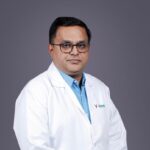
According to Dr. Guruprasad Hosurkar, a leading neurologist in Bangalore,
“Patients often ask me whether the disease ever stays still, and the honest answer is that it keeps changing, but so do we. The patient I treat today has options that simply did not exist a few years ago. My job is to match the right tools to the right moment in each person’s journey, and that window of what we can do keeps widening.”
Diagnosed with Parkinson’s and looking for expert management?
Why There Is No Cure Yet and What Research Is Working On ?
The core challenge in curing Parkinson’s is that by the time symptoms appear, substantial and irreversible dopaminergic cell loss has already occurred. Research in 2026 is focused on catching the disease earlier and slowing neurodegeneration before that damage accumulates.
- No approved disease-modifying therapy exists yet: All current treatments address symptom burden without slowing underlying progression, meaning dopaminergic cell loss continues regardless of how well symptoms are controlled.
- Alpha-synuclein targeting is the most advanced research avenue: Antibody therapies designed to clear pathological alpha-synuclein aggregates are in late-stage trials, with results from multiple programmes expected in the next two to three years.
- GLP-1 receptor agonists have produced the strongest real-world signal: Diabetic patients on semaglutide show a 40 to 50% lower Parkinson’s diagnosis rate compared to those on other medications, and dedicated Parkinson’s trials are actively recruiting in 2026.
- Stem cell and gene therapy approaches are early but credible: Dopaminergic neuron replacement and gene therapy targeting LRRK2 and GBA mutations are in phase 1 and 2 trials, representing the most direct attempts at addressing cell loss rather than compensating for it. Understanding where DBS surgery for Parkinson’s fits in the current treatment landscape helps patients make informed decisions while research continues.
A cure remains a realistic long-term goal, but the 2026 pipeline is more substantive than at any previous point in Parkinson’s research history.
What Effective Management Looks Like in Practice ?
While a cure is not yet available, structured and timely management makes a significant difference to how Parkinson’s affects daily life. The options available today cover motor symptoms, non-motor symptoms, and quality of life in ways that were simply not possible a decade ago.
- Levodopa remains the backbone of motor symptom treatment: It replaces depleted dopamine reliably, and with careful dose timing and formulation adjustments, it can extend years of good motor control before fluctuations become significant.
- DBS surgery is the most effective option once medication plateaus: When motor fluctuations and dyskinesias limit function despite optimised drugs, surgical intervention extends stable on time by 4 to 6 hours daily in well-selected patients.
- Physiotherapy, speech therapy, and exercise slow functional decline: Each has independent evidence for slowing both motor and cognitive decline in Parkinson’s and should be treated as essential components of management, not optional extras.
- Non-motor symptoms need their own active treatment plan: Sleep disorders, autonomic dysfunction, depression, and cognitive change progress independently of dopamine replacement and affect quality of life as significantly as motor symptoms. Full details on available approaches are covered under Parkinson’s disease treatment.
Starting treatment early, reviewing it regularly, and escalating at the right time separates patients who maintain function for 15 years from those who decline faster than necessary.
Why Consult Dr. Guruprasad Hosurkar for Parkinson's Disease in Bangalore?
Dr. Guruprasad Hosurkar leads the Movement Disorders and Parkinson’s Disease Programme at KIMS Hospital, Mahadevapura, offering the full spectrum of Parkinson’s management from early diagnosis through advanced surgical intervention including India’s first Adaptive Closed-Loop DBS centre. His approach combines honest outcome counselling with proactive treatment escalation, so patients and families are never managing the disease reactively when better options are available.
FAQs
Can Parkinson's disease be cured?
There is currently no cure for Parkinson’s disease. All available treatments, including medication, DBS surgery, and physiotherapy, manage symptoms and improve quality of life but do not stop the underlying neurodegeneration.
What is the most effective treatment for Parkinson's disease?
Levodopa remains the most effective symptomatic treatment for motor symptoms. For patients with motor fluctuations despite optimised medication, Deep Brain Stimulation surgery offers the best long-term motor control currently available.
How fast does Parkinson's disease progress?
Progression varies significantly between individuals. Some patients maintain good function for 10 to 15 years with treatment, while others experience faster decline. Younger onset, good levodopa response, and absence of cognitive symptoms are associated with slower progression.
Are there any disease-modifying treatments for Parkinson's disease?
No disease-modifying treatment is currently approved for Parkinson’s disease. Several candidates including alpha-synuclein antibodies and GLP-1 receptor agonists are in clinical trials in 2026, but none has yet demonstrated confirmed neuroprotective benefit in humans.