
Introduction
When a person develops shaking in the hands, the immediate fear is often Parkinson’s disease. But here’s the clinical reality: not every tremor is Parkinson’s. In fact, one of the most common causes of shaking is essential tremor, a completely different neurological condition.
Both conditions may look similar in the early stages, which is why they are frequently misdiagnosed. However, understanding the differences is crucial because treatment, prognosis, and long-term outcomes vary significantly.
As Dr. Guruprasad Hosurkar explains in clinical practice:
“The biggest mistake patients make is assuming all tremors are Parkinson’s. A careful neurological evaluation often reveals a very different story.”
What Is Parkinson’s Disease?
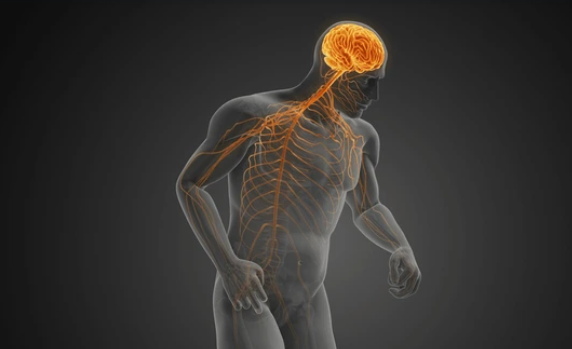
Parkinson’s disease is a progressive neurological disorder affecting movement control. It results from the degeneration of dopamine-producing neurons in the substantia nigra.
Dopamine plays a key role in coordinating movement. Reduced dopamine levels lead to impaired motor control and characteristic symptoms.
Key clinical features include:
- Resting tremor
- Muscle rigidity
- Slowness of movement (bradykinesia)
- Postural instability
The condition is more common in individuals over 60 and shows a higher prevalence in men. Tremor may not always be the first presenting symptom.
“Parkinson’s is not defined by tremor alone. Many patients initially present with stiffness, reduced arm swing, or even loss of smell.” — Dr. Guruprasad Hosurkar
Not sure whether your tremor is Parkinson’s or essential tremor? A detailed neurological evaluation can provide clarity. Book an assessment today.
What Is Essential Tremor?
Essential tremor is the most common movement disorder globally. It is significantly more prevalent than Parkinson’s disease.
It primarily causes an action tremor, meaning the shaking occurs during voluntary movement. The tremor typically subsides when the affected body part is at rest.
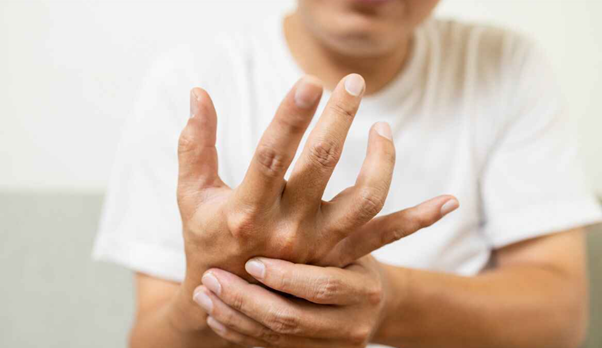
Common characteristics include:
- Tremor during activities like writing or holding objects
- Involvement of hands, head, and voice
- Often, a positive family history
The condition is not life-threatening but may impact daily functioning in moderate to severe cases.
Patient Scenario:
Difficulty holding a cup or signing a document can significantly affect daily independence in individuals with essential tremor.
Parkinson’s vs Essential Tremor: Key Differences
The most important clinical distinction lies in the timing of the tremor. Parkinson’s tremor occurs at rest, whereas essential tremor appears during movement.
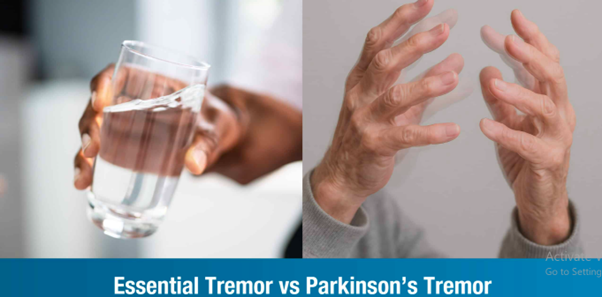
| Feature | Essential Tremor | Parkinson’s Tremor |
| Tremor type | Action tremor | Rest tremor |
| When it occurs | During movement | At rest |
| Body parts | Hands, head, voice | Hands, legs, jaw |
| Classic sign | Shaky handwriting | Pill-rolling motion |
| Other symptoms | Tremor dominant | Rigidity, slow movement |
| Family history | Common | Rare |
| Alcohol effect | Temporary relief | No change |
Which Body Parts Are Affected by Parkinson’s Disease and Essential Tremor?
- Parkinson’s Tremor Pattern:
Typically begins on one side, most often affecting the hands with a resting “pill-rolling” tremor. It may later involve the legs, chin, or jaw, while head tremor is uncommon. Asymmetry, with one side more affected, is a key clinical feature. - Essential Tremor Pattern:
Usually affects both hands symmetrically during activities such as writing or holding objects. Head and voice tremor are common, while leg involvement is rare. The tremor worsens with movement and is characteristically symmetrical.
What Causes Parkinson’s Disease and Essential Tremor?
Parkinson’s Disease
● Degeneration of dopamine-producing neurons
● Mostly idiopathic (unknown cause)
● Genetic mutations in select cases
● Environmental exposure (toxins, pesticides) may contribute
● Age and male gender increase the risk
Essential Tremor
● Abnormal cerebellar function implicated
● Strong genetic link (family history common)
● Worsened by stress, fatigue, caffeine
Can Both Occur Together?
● Conditions are distinct but may overlap
● Specialist evaluation is essential
How Is Parkinson’s Disease and Essential Tremor Diagnosed?
Doctors assess:
● Symptom progression
● Family and medication history
Investigations may include:
● DaTscan to evaluate dopamine activity
● EMG or accelerometry for tremor analysis
● Handwriting assessment
● Smell testing (an early Parkinson’s marker)
“The timing of tremor, whether at rest or during movement, provides critical diagnostic direction.” — Dr. Guruprasad
Treatment Options
Management strategies for Parkinson’s disease and essential tremor differ based on their underlying mechanisms, though both conditions can be effectively managed with a combination of medication, supportive therapy, and advanced interventions when required.
Parkinson’s Disease
Treatment focuses on restoring dopamine levels and improving motor function.
- Levodopa/carbidopa remains the gold standard, effectively replenishing dopamine
- Dopamine agonists help stimulate dopamine receptors and reduce symptoms
- MAO-B inhibitors slow the breakdown of dopamine, supporting sustained action
- Physiotherapy and speech therapy improve mobility, balance, and communication
- Deep Brain Stimulation (DBS) is considered in advanced or medication-resistant cases
Essential Tremor
Management is aimed at reducing tremor amplitude and improving daily function.
- Propranolol is the first-line medication for tremor control
- Primidone is commonly used, either alone or in combination
- Gabapentin and topiramate may be added in resistant cases
- Botulinum toxin injections are useful for focal tremors (e.g., voice, hand)
- Deep Brain Stimulation (DBS) is recommended for severe, disabling tremors
Deep Brain Stimulation (DBS)
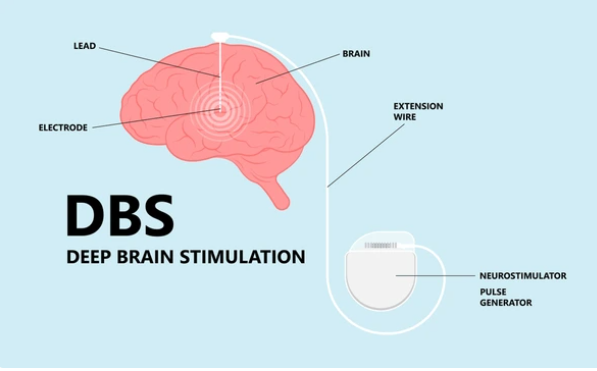
- In Parkinson’s disease, targets include the subthalamic nucleus (STN) or globus pallidus interna (GPi)
- In essential tremor, the ventral intermediate nucleus (VIM) of the thalamus is targeted
- This approach significantly reduces tremor severity and improves quality of life
When Should You See a Doctor?

Consult a neurologist if:
- Tremor persists beyond a few weeks
- Daily activities are affected
- Tremor is associated with stiffness or slowness
- Symptoms begin on one side
- Family history is present
- Early signs like loss of smell or sleep issues appear
“Do not ignore persistent tremors. Early diagnosis allows for more effective and timely treatment.” — Dr. Guruprasad Hosurkar
FAQs
1. What is the difference between Parkinson's and essential tremors?
2. What foods should you avoid with essential tremors?
3.What does a neurologist do for essential tremors?
4.What is the average age for essential tremors?
5.How often does essential tremor turn into Parkinson's?